
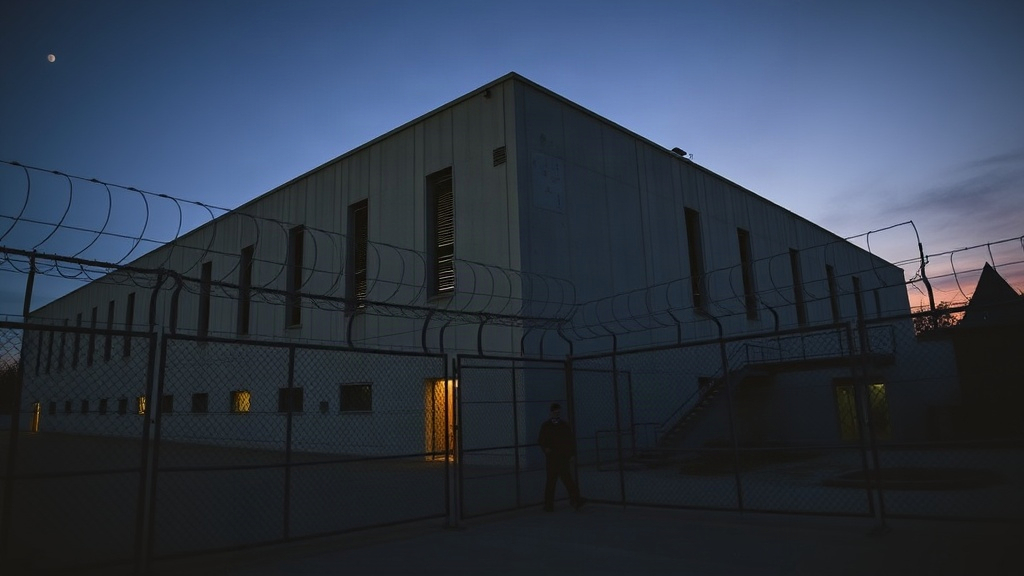
The Metropolitan Detention Center in Brooklyn has long been a place where the American justice system's contradictions are on full display. This week, those contradictions turned violent. A series of assaults and disturbances inside the facility, which currently houses high-profile detainees including Luigi Mangione and, until recently, high-level foreign nationals, has once again thrust the jail into the national spotlight. The violence was not an isolated incident but rather the latest symptom of a chronic crisis that has plagued the facility for years.
What Exactly Happened Inside the Brooklyn Jail?
According to multiple sources familiar with the situation, the unrest began in one of the facility's general population units and quickly spread. Inmates reported that tensions had been simmering for days, fueled by ongoing complaints about overcrowding, inadequate medical care, and a lack of programming. The immediate trigger appears to have been a dispute over access to the telephone, but underlying grievances quickly transformed the altercation into a broader demonstration of frustration.
Correctional officers responded with force, and the facility was placed on lockdown. At least three inmates were treated for injuries at a local hospital, and two staff members sustained minor injuries. No fatalities have been reported, but the incident has raised serious questions about the Bureau of Prisons' ability to manage a facility that houses such a volatile mix of pretrial detainees, convicted offenders, and individuals with significant mental health needs.
Why Luigi Mangione's Presence Raises the Stakes
The presence of Luigi Mangione, the 26-year-old accused of killing UnitedHealthcare CEO Brian Thompson, has made the Metropolitan Detention Center a focal point for public and media attention. Mangione, who is being held without bail on federal charges, has attracted a bizarre mix of supporters and detractors. Some see him as a symbol of resistance against corporate greed, while others view him as a cold-blooded killer. Regardless of one's perspective, his notoriety has turned the jail into a potential target for protests and has complicated the already difficult job of maintaining order.
Sources inside the facility say that Mangione has been kept in a special housing unit, away from the general population, but his mere presence has altered the dynamic. Other inmates are said to be aware of his status, and some have attempted to communicate with him or to gain his attention. This has created a tense atmosphere, as correctional officers struggle to prevent any interaction that could be exploited for propaganda purposes or that could lead to violence.
A History of Dysfunction at the Metropolitan Detention Center
The Metropolitan Detention Center, often referred to simply as MDC Brooklyn, has a long and troubled history. It was the site of a notorious 2019 power outage that left inmates without heat or electricity for a week in the dead of winter, leading to widespread protests and a federal lawsuit. Inmates have long complained about mold, vermin, and a lack of basic sanitation. The facility has also been criticized for its treatment of high-profile detainees, including Ghislaine Maxwell and R. Kelly, both of whom were held there while awaiting trial.
In recent years, the Bureau of Prisons has acknowledged staffing shortages at MDC Brooklyn, with many correctional officers forced to work mandatory overtime. This has led to fatigue, low morale, and a high turnover rate, all of which contribute to a volatile environment. The facility was designed to hold approximately 1,000 inmates but often houses far more, exacerbating tensions and making it difficult to provide adequate services.
The Maduro Connection: A Diplomatic Flashpoint
The mention of Maduro in connection with the jail is a reminder of the facility's role in housing high-profile foreign nationals. While Venezuelan President Nicolás Maduro is not himself detained there, the United States has detained several individuals linked to his government, and the jail has been used to hold them. The presence of such individuals adds a layer of diplomatic complexity, as their treatment can become a subject of international dispute. In the current climate, with relations between the U.S. and Venezuela already fraught, any incident at the jail could have geopolitical repercussions.
It is worth noting that the facility's population includes a significant number of non-citizens, many of whom are held on immigration charges. This has made it a target for criticism from immigrant rights groups, who argue that the conditions violate basic human rights standards. The recent violence has only intensified those criticisms.
Systemic Failures That Go Beyond One Incident
The violence at MDC Brooklyn is not simply a story about a few bad actors or a momentary lapse in security. It is a symptom of a system that has been underfunded, understaffed, and overlooked for decades. The Bureau of Prisons has faced repeated calls for reform, and yet little has changed. The result is a facility where violence is not an aberration but an expected occurrence.
Experts point to several key factors: chronic understaffing, which leaves officers unable to respond quickly to incidents; a lack of meaningful programming, which leaves inmates idle and frustrated; and a failure to address mental health issues, which affects a large portion of the population. Until these underlying problems are addressed, incidents like the one this week will continue to occur, regardless of who is housed inside.
What Happens Next?
In the short term, the facility will likely remain on lockdown while an investigation is conducted. The Bureau of Prisons has promised to review its procedures, but similar promises have been made before with little result. Advocates are calling for an independent investigation and for immediate improvements to conditions. Some lawmakers have also weighed in, demanding answers about how such violence could occur in a facility that is supposed to be secure.
For Mangione, the incident may have little direct impact on his case, but it could affect the public perception of his detention. His supporters have already begun to use the violence as evidence of the injustice of his confinement, while his critics argue that the chaos only reinforces the need for a secure facility. Either way, the spotlight on MDC Brooklyn is unlikely to fade anytime soon.
Conclusion: A Crisis That Cannot Be Ignored
The violence at the Metropolitan Detention Center is a stark reminder that the American criminal justice system is not just about courts and laws; it is also about the physical spaces where people are held. Those spaces have consequences. They can either uphold the dignity of the people inside or erode it. Right now, MDC Brooklyn is eroding, and the people inside are paying the price. The question is whether anyone with the power to change things is paying attention.
Frequently Asked Questions
What is the Metropolitan Detention Center in Brooklyn?
The Metropolitan Detention Center, or MDC Brooklyn, is a federal administrative detention facility operated by the Federal Bureau of Prisons. It houses pretrial detainees and inmates serving short sentences, and it has been the site of numerous high-profile detentions, including those of Luigi Mangione, Ghislaine Maxwell, and R. Kelly.
Why is Luigi Mangione being held at MDC Brooklyn?
Luigi Mangione is being held at MDC Brooklyn because he is facing federal charges related to the killing of UnitedHealthcare CEO Brian Thompson. He is considered a flight risk and a danger to the community, so he is being detained without bail while awaiting trial.
Has there been violence at MDC Brooklyn before?
Yes, MDC Brooklyn has a long history of violence and unrest. The facility has experienced numerous assaults, riots, and disturbances, often linked to overcrowding, understaffing, and poor conditions. The 2019 power outage and subsequent protests are among the most notable incidents.
What is being done to improve conditions at the jail?
The Bureau of Prisons has announced various initiatives to improve conditions, including hiring more staff and increasing funding for programming. However, advocates and inmates say that progress has been slow and that conditions remain dire. There are ongoing lawsuits and calls for independent oversight.
How does the violence affect the cases of high-profile inmates?
The violence at MDC Brooklyn can affect high-profile inmates in several ways. It may lead to stricter security measures, which can limit access to legal counsel and family. It can also be used by defense attorneys to argue that their clients are being held in inhumane conditions, which could impact bail decisions or sentencing.