
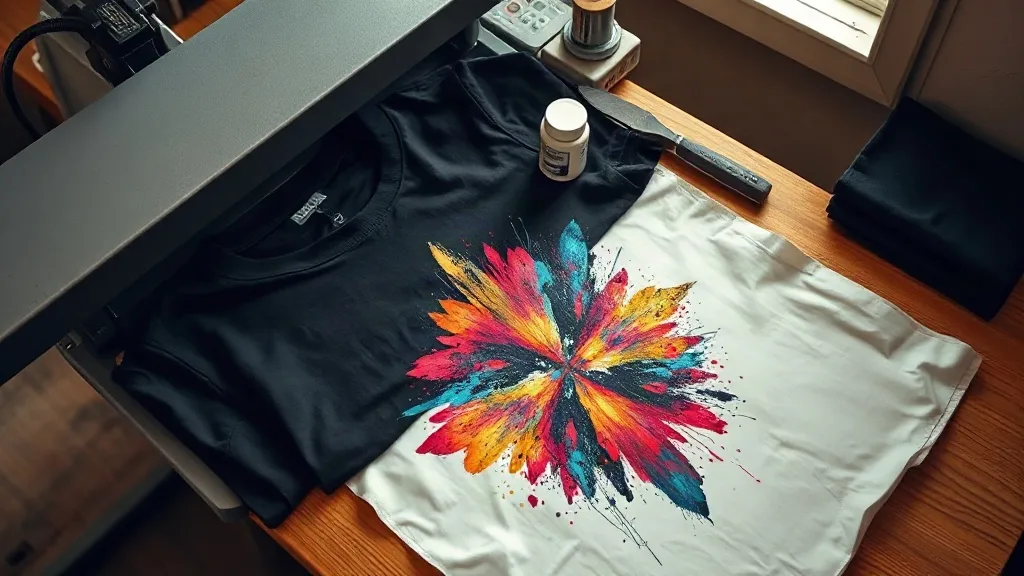
Most print shops I know arrived at dtf transfers through the same back door: a customer asked for a full-color design on a dark hoodie, the screen printing quote came back too high for a run of six, and the job nearly walked out the door. That moment is where direct-to-film earns its place in a small shop. It gives you photographic color and fine detail without burning a screen or mixing a single ink bucket, and it works on cotton, polyester, and most of the blends in between.
What follows is not a sales pitch. It is the practical version of what I wish someone had explained to me before I spent money on equipment and film I did not yet know how to use well.
What DTF Actually Is, Stripped of the Marketing
Direct-to-film printing is a two-part process. First, a printer lays down a mirror-image design in water-based pigment ink onto a coated PET film. Then a powder adhesive is applied to the wet ink and cured. The finished film is a transfer sheet. To apply it, you place the sheet on the garment, press it with heat, let it cool, and peel.
The dtf workflow differs from sublimation in one important way: sublimation only bonds to polyester and leaves a ghost on cotton, while film transfers bond to the fabric surface through the adhesive. That single difference opens up dark cottons, canvas totes, and 50/50 blends that sublimation simply cannot touch.
Why the Powder Step Matters More Than People Think
The adhesive powder is what makes the transfer survive a washing machine. Under-cure it and the print cracks within a few washes. Over-cure it and the powder melts into a glossy sheet that feels like plastic on the chest. The sweet spot is a short shake of powder, a gentle tap to remove the excess, and a cure at the temperature your powder manufacturer specifies, usually somewhere between 160 and 170 degrees Celsius for a minute or so. Every powder behaves a little differently, so test a strip before you commit a full order.
Where DTF Fits in a Real Shop's Workflow
Direct-to-film is not a replacement for screen printing. It is a complement that fills a specific gap. Here is how the jobs tend to sort themselves out once you have the capability in-house:
- Short runs with full color. One to fifty pieces with gradients, photos, or dozens of colors. Screens cannot compete on setup cost here.
- Names and numbers. Sports teams, stag dos, staff uniforms. Personalization is fast because you change the file, not the setup.
- Dark garments. The white ink layer under the color is what makes the design pop, and film handles this natively.
- Odd placements. Sleeves, pockets, the back yoke of a jacket. A small heat press reaches places a screen frame cannot.
Where it loses: large runs of one-color work on light shirts. At two hundred pieces, screen printing is cheaper per unit and the hand feel is softer. Knowing when to say no is as valuable as knowing when to say yes.
The Fabric Conversations You Will Have
Customers ask whether the print will last. The honest answer depends on the fabric. On 100% cotton, adhesion is strong and the print stays soft. On high-polyester performance wear, you need to lower the press temperature and watch for dye migration, where the garment's own dye bleeds up through the white ink over time. A low-bleed white ink and a slightly cooler press solve most of it. On nylon and heavily coated water-resistant shells, film transfers generally will not bond, and you should say so before taking the order.
Buying Transfers vs. Buying a Printer
This is the decision that trips up new shops. A desktop film printer plus a shaker or powder unit plus a heat press is a real capital commitment, and it comes with maintenance: print heads clog, film curls in humidity, and powder gets everywhere if you are not disciplined about containment.
If you are testing demand, ordering ready-made transfers from a supplier makes far more sense. You send artwork, receive sheets, and press them yourself. Your margin is thinner per unit, but your risk is close to zero and you learn the press settings on someone else's film. Once you are pressing a few hundred pieces a month, the math flips and owning the equipment starts to pay for itself.
For customers searching for dtf transfers near me, the practical question is turnaround. Local suppliers can often deliver in a day or two, which matters when a team needs shirts before a Saturday match. Online suppliers are usually cheaper but add shipping time. Keep one local option and one bulk option in your contacts.
Press Settings That Actually Work
Every press runs a little hot or cold, so treat these as starting points and dial in from there:
- Pre-press the garment for a few seconds to remove moisture. Damp fabric is the most common cause of a transfer that peels early.
- Press at medium pressure for around 15 seconds at 150 to 160 degrees Celsius. Too little pressure and the adhesive never reaches the fibers.
- Cool before peeling. Cold peel gives a cleaner edge and a matte finish. Warm peel is faster but can stretch the design.
- Second press for five seconds with a cover sheet to lock the edges down.
Wash care advice belongs on the hang tag: inside out, cold water, no fabric softener, tumble low or hang dry. Customers who follow that get months of wear out of a print, and they come back.
The Mistakes That Cost Beginners Money
The first is skipping the test press. Print a small sample on each fabric type you stock and wash it three times before you promise a customer anything. The second is buying the cheapest film. Cheap film releases unevenly and leaves adhesive residue on the press platen, which then transfers onto the next garment. The third is ignoring storage: film absorbs humidity, so keep it sealed with a desiccant pack and use it within the window your supplier recommends.
The fourth, and the most expensive, is pricing by gut feeling. Work out your cost per sheet, add your press time, add a waste allowance of roughly ten percent, and then apply your margin. Shops that skip this step often discover a year later that their best-selling product was quietly losing money.
Frequently Asked Questions
Can DTF transfers go on 100% polyester athletic wear?
Yes, but with adjustments. Lower the press temperature to around 130 to 140 degrees Celsius and use a low-bleed white ink to prevent the garment dye from migrating into the print. Always run a wash test on the specific garment before a bulk order.
How long does a DTF print last after washing?
With correct pressing and cold-water washing inside out, most prints hold up for fifty or more wash cycles. Heat and fabric softener are the main enemies, since both break down the adhesive layer over time.
Do I need a special press for DTF?
No. A standard clamshell or swing-away heat press works, as long as it holds consistent temperature and pressure. What you do need is a press you can calibrate, because a press reading ten degrees off will cause peeling that looks like a film problem but is really a settings problem.
Is DTF cheaper than screen printing?
For small runs, yes. There is no screen setup, so a ten-piece order costs roughly the same per unit as a fifty-piece order. Above a few hundred pieces of simple one-color work, screen printing becomes cheaper per unit and offers a softer hand feel.
Where can I find reliable DTF transfers near me?
Start with local print suppliers and ask for a sample sheet before committing to a volume order. Test the sample on your own garments and press, then compare it against an online supplier on price and delivery time. Keeping one fast local source and one economical bulk source covers most situations.