
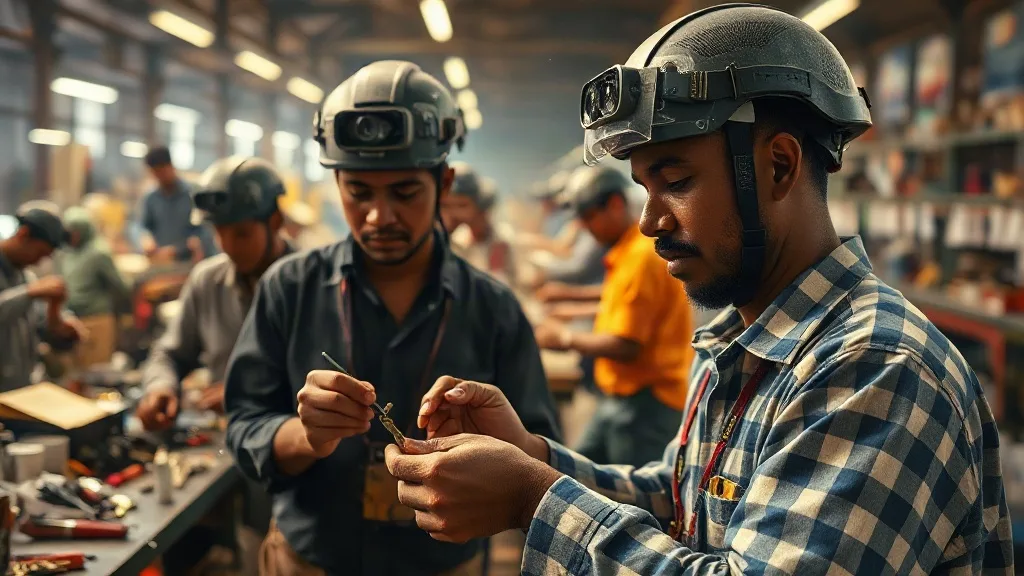
In factories, farms, and workshops across India, a quiet revolution is taking place. Workers are attaching cameras to their helmets, chests, or wrists and recording their every move. The footage is then sold to companies that use it to train artificial intelligence systems. This phenomenon, known as "data collection for AI," is part of a global race to gather the massive datasets needed to teach machines how to perform human tasks. But behind the seemingly innocuous act of filming work lies a complex web of economic, ethical, and social implications.
The Rise of Work Filming
The practice is simple: workers are paid to wear cameras and go about their normal routines. The resulting videos capture the nuances of manual labor—how a hand grips a tool, how a farmer sorts produce, how a seamstress stitches fabric. These videos are gold for AI developers, who use them to train robots and software to mimic human actions. In India, with its vast labor force and diverse industries, the opportunity to collect such data is immense.
Companies like Bangalore-based startup AI Trainers India have built a business model around this. They recruit workers from various sectors, equip them with cameras, and pay them an hourly wage for the footage. The workers, often earning low incomes, see this as a supplementary source of revenue. For the AI companies, it's a cost-effective way to obtain real-world data that would be difficult to replicate in a lab.
Why India?
India's appeal lies in its combination of a large, diverse workforce and relatively low labor costs. The country offers a wide range of manual activities, from traditional crafts to modern manufacturing, providing a rich tapestry of movements for AI to learn. Moreover, the government's push for digitalization and the widespread availability of cheap smartphones and internet data have made it easier for workers to participate.
However, this also raises concerns about exploitation. Critics argue that workers may not fully understand how their data will be used or the long-term implications. There is also the risk of privacy breaches if the footage inadvertently captures sensitive information. While companies claim to anonymize data, the line between work and personal life can blur when cameras are worn all day.
The Economic Impact
For many workers, the extra income is a lifeline. In a country where informal employment is the norm and wages are often meager, the opportunity to earn even a small stipend for filming can make a significant difference. Some workers report earning up to 200 rupees (about $2.50) per hour, which is above the minimum wage in many Indian states.
But the long-term economic impact is more nuanced. As AI systems become more sophisticated, they may eventually replace the very jobs that are being filmed. The workers who are currently training their replacements may find themselves redundant. This paradox is at the heart of the debate: by participating in the data economy, workers may be accelerating their own obsolescence.
Ethical and Privacy Concerns
The ethical questions are manifold. Do workers give informed consent? Are they aware that their movements could be used to develop robots that replace them? And what about privacy? Even with anonymization, the footage could reveal personal habits, health conditions, or other sensitive details.
Some companies have implemented strict protocols, such as blurring faces and removing audio, but enforcement is inconsistent. There is also the issue of data ownership. Workers are paid a one-time fee, but the data may generate enormous value for the AI company. Should workers receive royalties or a share of the profits? These questions are only beginning to be addressed.
Regulatory Landscape
India's data protection laws are still evolving. The Personal Data Protection Bill, which is pending in parliament, aims to regulate the collection and use of personal data. However, it remains unclear how it will apply to work-filming scenarios. Some experts call for specific guidelines that ensure transparency, fair compensation, and the right to withdraw consent.
Without clear regulations, the practice could proliferate unchecked, leading to potential abuses. Labor unions and advocacy groups are urging the government to step in and protect workers' rights.
The Future of Work
As AI continues to advance, the demand for training data will only grow. The Indian workers filming their work are on the front lines of this transformation. Their experiences highlight the need for a balanced approach that harnesses the benefits of AI while safeguarding the dignity and livelihoods of those who contribute to it.
For now, the cameras keep rolling, capturing the sweat and skill of human labor, one frame at a time. The question is whether the workers themselves will share in the prosperity their data helps create.
Frequently Asked Questions
What exactly is work filming for AI training?
Work filming involves workers wearing cameras to record their tasks. The footage is used to train AI models to recognize and replicate human actions, often for robotics or automation.
How much do Indian workers get paid for this?
Pay varies, but some workers earn around 200 rupees per hour, which can be a significant supplement to their regular income.
Is this practice legal in India?
It exists in a legal gray area. While there are general data protection laws, specific regulations for work filming are lacking. The pending Personal Data Protection Bill may address it.
Could this lead to job losses?
Yes, there is a risk that the data collected could be used to automate the very jobs being filmed, potentially displacing workers.
What are the main ethical concerns?
Informed consent, privacy, fair compensation, and data ownership are key concerns. Workers may not fully understand how their data will be used or its value.