
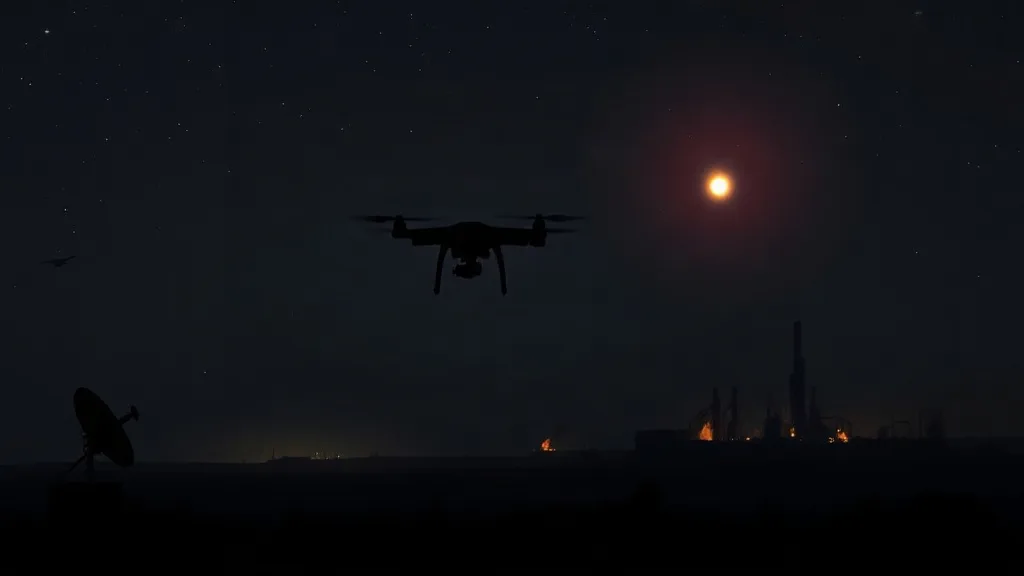
In the early hours of Thursday, Ukrainian drones struck a refinery deep inside Russian territory, underscoring Kyiv's determination to bring the war home to Moscow even as it confronts a fresh technological hurdle. The attack, which Ukrainian President Volodymyr Zelensky framed as a response to Russia's continued aggression, came just a day after Ukraine lost access to Starlink satellite services that guide its drone fleet, a development one defense adviser called a "snafu" that could blunt its edge.
The refinery strike and the Starlink disruption are two sides of the same coin: Ukraine's ability to fight a high-tech war of attrition. Meanwhile, in the United States, former President Donald Trump is trying to rally Republican voters, injecting another layer of uncertainty into a conflict that has already reshaped global politics. Together, these events paint a picture of a war that is as much about technology and politics as it is about territory.
Ukraine's Refinery Strike: A Message to Moscow
The target was a Russian oil refinery, a critical node in the Kremlin's war economy. While the exact location and extent of damage remain unclear, the fact that Ukrainian drones managed to penetrate Russian airspace and hit such a facility speaks volumes. It is a tactic Ukraine has employed repeatedly in recent months, aiming to disrupt fuel supplies for the Russian military and inflict economic pain on the Russian public.
President Zelensky, in a post online, said that "Russia continues its bloody terror," a reference to ongoing attacks on Ukrainian cities. By striking the refinery, Ukraine is signaling that it will not be a passive victim. The operation also serves a psychological purpose: showing Russians that the war is not distant, and that their own infrastructure is vulnerable.
Yet the success of such strikes depends heavily on precise targeting and real-time coordination, which is where Starlink comes in. The satellite network, provided by Elon Musk's SpaceX, has been a lifeline for Ukraine's military communications, enabling everything from artillery spotting to drone control. Without it, Ukraine's ability to conduct long-range strikes could be compromised.
The Starlink Snafu: A Wake-Up Call
The loss of Starlink access, described by Ukrainian defense adviser Serhii Breskrestnov as a "snafu," is more than a technical glitch. It exposes a critical vulnerability: Ukraine's heavy reliance on a single commercial provider for battlefield connectivity. The outage, which reportedly affected drone operations, highlights the precarious nature of depending on private companies for national security.
Starlink terminals have been ubiquitous on the Ukrainian front lines, allowing troops to maintain communication even when cellular networks are down. For drone operators, the satellite link is essential for streaming video and receiving commands. When that link is severed, drones can become ineffective or even lost.
While the cause of the outage is not fully clear, it raises questions about the reliability of Starlink in a war zone. SpaceX has previously imposed restrictions on how Ukraine can use the service, reportedly to avoid escalation. This incident will likely accelerate Ukraine's efforts to find alternatives, whether through other satellite providers or domestic solutions. But in the short term, it is a setback.
It also underscores a broader issue: modern warfare is increasingly fought in the electromagnetic spectrum, and control over data links can be as decisive as control over territory. Ukraine's drone campaign, which has been one of its most effective tools, now faces a new challenge.
Trump's GOP Rally: Shifting Political Winds
Across the Atlantic, former President Donald Trump is back on the campaign trail, trying to rally Republican voters. His message, as always, is a mix of grievance and grand promises, but this time it intersects with the war in Ukraine. Trump has long been skeptical of U.S. aid to Kyiv, and his potential return to the White House could upend the Western alliance that has supported Ukraine.
At a recent rally, Trump urged Republicans to unite behind him, arguing that only he can fix the country's problems. While he did not focus extensively on Ukraine, his stance on the conflict is well known: he has claimed he could end the war in 24 hours, though he has not explained how. Such rhetoric alarms Kyiv and its European allies, who fear a drastic reduction in U.S. support.
The political dynamics in Washington are already affecting the battlefield. A recent aid package for Ukraine was delayed for months due to Republican opposition, leaving Ukrainian forces short on ammunition. If Trump succeeds in rallying the GOP behind his America First agenda, future aid could be even more uncertain.
For now, Trump's immediate goal is to shore up support ahead of primary contests and the general election. His rallies are designed to energize his base, but they also send a signal to the world: the United States may not be a reliable partner in the long run.
The Bigger Picture: A War on Multiple Fronts
The refinery strike, the Starlink glitch, and Trump's political maneuverings are not isolated events. They are interconnected threads in a complex tapestry. Ukraine's military strategy relies on technology and Western support; both are now in flux. The Starlink outage shows how quickly technological advantages can evaporate, while Trump's rhetoric reminds us that political support is equally fickle.
Russia, meanwhile, is watching closely. The Kremlin likely sees the Starlink disruption as an opportunity to exploit. If Ukraine's drone operations are hampered, Russia could gain breathing room to regroup and reinforce its defenses. And if U.S. aid dwindles, Russia's advantage in manpower and materiel could become overwhelming.
Ukraine's response will be twofold: on the battlefield, it will continue to innovate, perhaps developing backup communication systems or using more autonomous drones that do not rely on live satellite links. On the diplomatic front, it will redouble efforts to lock in support from Europe and other allies, hedging against a possible U.S. pullback.
For the United States, the coming months will be decisive. The election will determine not only who leads the country but also the direction of its foreign policy. Trump's rallying cry may resonate with his base, but it also raises the stakes for Ukraine and for the global order.
What to Watch Next
- Ukraine's drone capabilities: Can Kyiv adapt to the loss of Starlink? Look for announcements about new partnerships or technologies.
- Russia's reaction: Will Moscow escalate in response to the refinery strike? Retaliatory attacks on Ukrainian infrastructure are likely.
- U.S. political developments: Trump's influence on the GOP and the fate of Ukraine aid in Congress will be key indicators.
- European support: As U.S. commitment wavers, Europe may need to step up. Watch for increased defense spending and bilateral security agreements.
In war, as in politics, timing is everything. Ukraine's refinery strike was a bold move, but it may be remembered more for the Starlink glitch that followed. Trump's rally may fire up his base, but it also sends a chill through Kyiv. The next few weeks will reveal whether these are mere hiccups or turning points.
Frequently Asked Questions
Why did Ukraine target a Russian refinery?
Ukraine aims to disrupt Russia's war economy by hitting energy infrastructure that fuels its military and generates revenue. Refineries are high-value targets because they are difficult to replace and their loss can cause fuel shortages.
What is the Starlink 'snafu' and how does it affect Ukraine's military?
The Starlink snafu refers to a disruption in satellite internet service that Ukraine uses to control drones and maintain communications. Without it, drone operations become less effective, and troops lose a critical link for coordination.
How does Trump's stance on Ukraine impact the war?
Trump has been critical of U.S. aid to Ukraine, and his potential re-election could lead to reduced support. This uncertainty affects Ukraine's planning and may encourage Russia to hold out for a better deal.
What alternatives does Ukraine have if Starlink is unreliable?
Ukraine is exploring other satellite providers, such as OneWeb, and developing domestic communication systems. It is also investing in more autonomous drones that can operate without live satellite links.
What are the implications for global security?
The conflict highlights the risks of relying on commercial technology in warfare and the fragility of international support. A shift in U.S. policy could embolden adversaries and weaken alliances, with consequences far beyond Ukraine.