
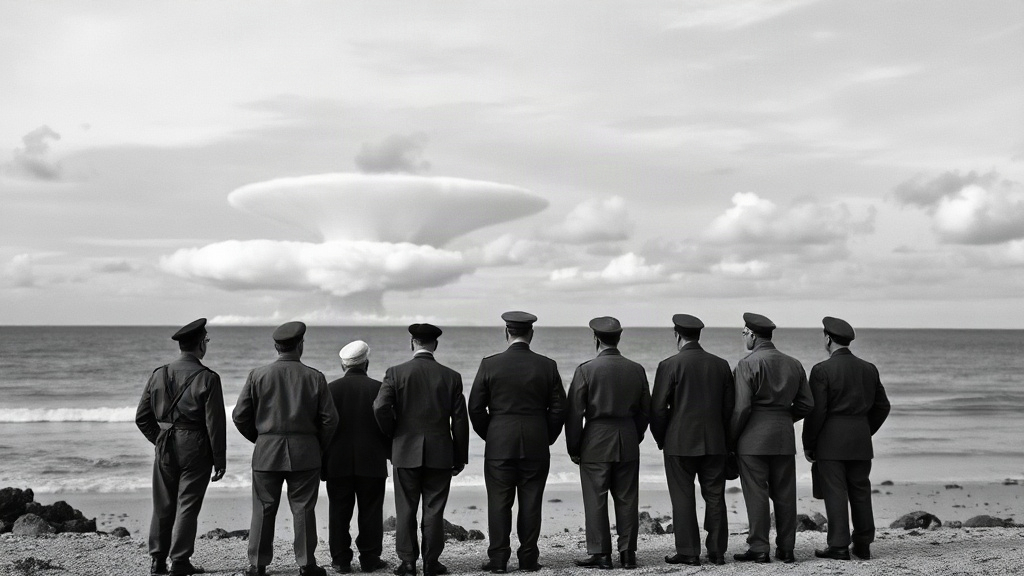
In December 2018, a seemingly routine parliamentary question about historical nuclear tests exposed a painful truth that still haunts many British service personnel and their families. The question was simple: were blood samples taken from personnel during the cold war-era nuclear bomb tests for radiological monitoring? The answer given at the time was that the Ministry of Defence could not locate any information suggesting such samples had been taken. That answer was wrong. Now, the man who delivered it is speaking out, calling for justice for the veterans who have been denied access to crucial evidence that could support their compensation claims.
The Misleading Statement and Its Aftermath
When a defence minister stands before parliament, their words carry weight. Veterans, their families, and campaigners listen carefully because they have spent decades seeking recognition for illnesses they believe were caused by radiation exposure during nuclear tests. The 2018 statement, which the former minister now acknowledges was inadvertently misleading, was a blow to those who had been fighting for answers.
It has since emerged that blood samples were indeed taken across the armed services during the nuclear tests. These samples, if they still exist and can be accessed, could provide vital evidence for veterans who have developed cancers and other serious conditions. The fact that they were not disclosed, even unintentionally, raises serious questions about transparency and accountability within the Ministry of Defence.
Britain's Nuclear Testing Legacy
Between 1952 and 1967, the United Kingdom conducted a series of atmospheric nuclear tests, primarily in Australia and the Pacific. Thousands of British service personnel were involved, often without full understanding of the risks they faced. Many later developed illnesses that they attribute to radiation exposure, including various cancers, blood disorders, and other debilitating conditions.
For decades, these veterans have campaigned for recognition and compensation. They argue that the government has a moral and legal duty to support those whose health was sacrificed in the name of national security. The struggle has been long and frustrating, with many veterans feeling ignored or dismissed by successive governments.
The Importance of Blood Samples
Blood samples taken at the time of the tests are more than just medical records; they are potential proof of exposure. If samples were collected and stored, they could be analysed to determine whether individuals were exposed to unusual levels of radiation. This evidence could be decisive in compensation claims, which often fail because veterans cannot prove causation.
The former minister's admission that samples were taken, and that the earlier statement was incorrect, has reignited hope among veterans and their supporters. It suggests that the truth has been obscured for too long, and that there may be more information yet to be uncovered.
Calls for Justice and Transparency
The former defence minister is now calling for a full investigation and for the government to release all relevant information. He argues that veterans deserve the truth about what happened to them and what the government knew. He also supports calls for a fair compensation scheme that does not require veterans to prove causation to an impossible standard.
Campaign groups have long demanded a public inquiry into the nuclear tests and their health effects. They point to similar scandals in other countries, where governments have acknowledged responsibility and provided compensation. In the UK, however, progress has been painfully slow.
What the Government Must Do
Advocates say the government must take several immediate steps to address this scandal. First, it should conduct a thorough search for any remaining records, including blood samples, and make them available to veterans and their medical advisers. Second, it should establish an independent inquiry to examine the conduct of the Ministry of Defence and other agencies over the decades. Third, it should create a no-fault compensation scheme for nuclear test veterans, similar to those for other occupational hazards.
Without these actions, the suffering of thousands of veterans and their families will continue. Many have already died without seeing justice. The time for action is now.
A Personal Reckoning
For the former minister, this is a deeply personal issue. He has expressed regret for his role in the misleading statement, even though he was relying on information provided by officials. His decision to speak out now, after leaving government, adds weight to the campaign. It suggests that those inside the system sometimes struggle to get the truth, and that change may only come from outside pressure.
His call for justice is not just about correcting a parliamentary record; it is about acknowledging the sacrifices made by service personnel and ensuring that they are treated with dignity and respect.
The Broader Implications
This scandal raises wider questions about how governments handle sensitive historical information. The nuclear tests were conducted during a period of heightened tension and secrecy, but that does not excuse decades of obfuscation. The veterans who served their country deserve better than to be denied the evidence that could prove their suffering was caused by that service.
The case also highlights the importance of parliamentary accountability. When ministers make statements, they must be accurate. If they are not, there must be mechanisms to correct the record promptly and transparently.
Frequently Asked Questions
What were the British nuclear tests?
The British nuclear tests were a series of atmospheric and underground nuclear explosions conducted by the United Kingdom between 1952 and 1991, primarily in Australia and the Pacific. Thousands of military personnel and civilians were involved, many without adequate protective measures or informed consent.
How many veterans are affected by nuclear test radiation?
Exact numbers are difficult to determine, but campaign groups estimate that over 20,000 British service personnel participated in the tests. Many have since developed cancers and other illnesses they attribute to radiation exposure. The true scale of affected individuals may be higher due to underreporting and lack of comprehensive health monitoring.
Why is compensation so difficult for nuclear test veterans?
Compensation claims often fail because veterans must prove that their illnesses were caused by radiation exposure during the tests. This is extremely difficult due to the lack of accessible medical records, including blood samples, and the long latency period of many radiation-induced diseases. The government has also disputed the link between the tests and health outcomes, making legal claims an uphill battle.
What can be done to support nuclear test veterans now?
Supporters call for the release of all historical records, including blood samples, and for the establishment of a no-fault compensation scheme. They also urge the government to issue a formal apology and to fund ongoing medical care for affected veterans and their families. Public awareness and political pressure are seen as key to achieving these goals.
Is there a public inquiry into the nuclear tests?
As of now, there has been no full public inquiry into the British nuclear tests and their health effects. Campaigners have repeatedly called for one, but successive governments have resisted. The recent admission by a former defence minister may increase pressure for such an inquiry.