
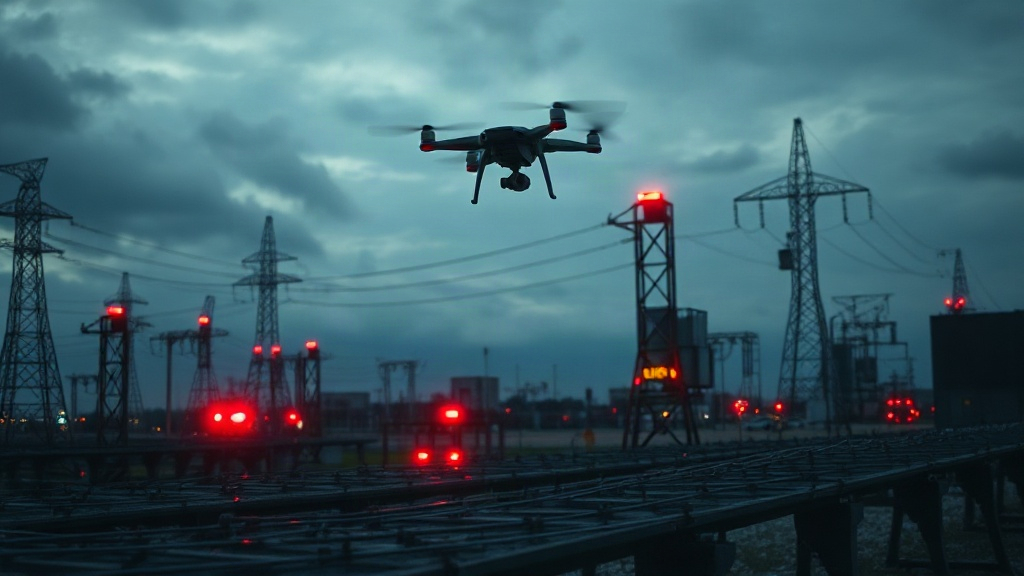
The fallout from the recent drone incident near Leipzig has taken a sharp diplomatic turn, with Russian President Vladimir Putin publicly condemning Germany's decision to point the finger at Moscow. Speaking to reporters during a scheduled event, Putin described Berlin's stance as a grave mistake, warning that such accusations could push Europe toward an unnecessary confrontation. His remarks come as EU foreign ministers gather to discuss a unified response, raising the stakes in an already tense relationship between Russia and the West.
The incident in question involved a drone that reportedly disrupted operations at a power substation outside Leipzig, prompting German authorities to launch a full-scale investigation. While details remain limited, the German government has signaled that it believes Russia may have been involved, a claim that Moscow has vigorously denied. Putin's latest comments are the strongest signal yet that Russia intends to fight the accusations on the diplomatic front, framing the situation as a manufactured crisis designed to justify further European sanctions or military support for Ukraine.
What Happened in Leipzig?
In late August, a drone was spotted near a critical energy facility in the Leipzig area, leading to a temporary shutdown and heightened security alerts. German police quickly opened an investigation, focusing on possible sabotage and the disruption of public services. The incident came at a time when European governments are already on high alert for hybrid warfare tactics, including cyberattacks and infrastructure tampering, that they attribute to Russia.
Officials in Berlin have been careful not to release too many specifics, citing an ongoing inquiry. However, multiple German media outlets have reported that initial evidence points toward a deliberate act, rather than an accident or hobbyist drone flight. The suspicion of Russian involvement stems from a pattern of similar incidents across Europe, including GPS jamming, cyber intrusions, and even physical acts of sabotage that Western intelligence agencies have linked to Moscow. Still, the Leipzig case remains unproven, and Russian officials have called the allegations baseless.
Putin's Response: A Strategic Denial
President Putin's decision to address the Leipzig incident directly is notable. In the past, the Kremlin has often dismissed Western accusations with terse statements or ignored them altogether. This time, Putin chose to engage, calling Germany's move a grave mistake and suggesting that it reflects a broader anti-Russian bias within NATO and the European Union. By framing the accusation as an emotional overreaction, Putin appears to be aiming at two audiences: domestic supporters who value a strong stance against the West, and European publics who may be wary of escalating tensions.
Putin's language was carefully chosen. He did not explicitly threaten retaliation, but he warned that such unfounded claims could undermine diplomatic channels and make future negotiations more difficult. He also invoked the broader context of the Ukraine war, suggesting that Germany's accusation is part of a coordinated effort to isolate Russia and justify continued military aid to Kyiv. This narrative resonates with Russia's long-standing claim that it is the victim of a Western information war.
Europe's Dilemma: How to Respond?
As Putin's words circulate, EU foreign ministers are meeting in Brussels to discuss the Leipzig incident and other security threats. The central question is how to respond without provoking a wider conflict. Some member states, particularly those bordering Russia, are pushing for a strong, unified condemnation and possible new sanctions. Others, wary of economic fallout and already strained energy supplies, prefer a more measured approach that leaves room for dialogue.
NATO Secretary General Mark Rutte added fuel to the fire by stating that Russia has grown increasingly reckless in its actions. Rutte's comments, made ahead of the EU meeting, suggest that the alliance views the Leipzig drone incident not as an isolated event but as part of a broader pattern of Russian aggression. However, NATO itself has not yet attributed the incident to Russia, and officials are careful to distinguish between intelligence assessments and public accusations.
The debate within Europe reflects a deeper anxiety about hybrid warfare. Unlike traditional military attacks, hybrid tactics such as drone incursions, cyberattacks, and disinformation campaigns are difficult to attribute with certainty. This ambiguity gives Russia plausible deniability while allowing it to test Western resolve. For Germany, which has historically favored diplomatic engagement with Moscow, the Leipzig incident is a stark reminder that the security landscape has changed dramatically since the invasion of Ukraine.
Implications for European Security
The Leipzig drone incident is more than a localized disruption; it is a test case for how Europe handles gray-zone aggression. If Germany's investigation concludes that Russia was indeed responsible, the EU will face pressure to respond in a way that deters future attacks without triggering a military escalation. Options include expelling Russian diplomats, imposing new sanctions on individuals or entities linked to the incident, or increasing NATO patrols over critical infrastructure.
However, a robust response carries risks. Russia could retaliate by cutting off remaining energy supplies, escalating cyberattacks, or increasing military activity near NATO borders. European leaders are also mindful that public opinion is not uniformly in favor of a confrontational stance. Economic pressures, including high energy costs and inflation, have made some voters wary of policies that might worsen relations with Moscow.
Putin's grave mistake comment is likely intended to exploit these divisions. By casting Germany's accusation as reckless and unfounded, he hopes to encourage European governments to second-guess their own intelligence and avoid a unified front. Whether this tactic succeeds will depend on the strength of the evidence Germany presents and the diplomatic skill of EU leaders in crafting a response that is both firm and proportionate.
A Broader Pattern of Hybrid Attacks
The Leipzig incident did not happen in a vacuum. In recent months, European countries have reported a series of suspicious activities, including severed undersea cables, GPS interference affecting civilian aviation, and cyberattacks on government networks. While not all of these incidents can be definitively linked to Russia, the cumulative effect has been to create a climate of insecurity. Western intelligence agencies have warned that Russia is investing heavily in unconventional warfare capabilities, viewing them as a way to weaken NATO's cohesion without triggering Article 5, the alliance's collective defense clause.
Germany, as Europe's largest economy and a key transit hub for energy, is an attractive target. The substation near Leipzig is part of a network that supplies power to millions of people, and a successful attack could have caused widespread blackouts and economic damage. The fact that a drone was able to approach the facility raises questions about the adequacy of current security measures at critical infrastructure sites across Europe.
In response, some German politicians have called for new legislation to allow the military to shoot down suspicious drones over sensitive areas. Others advocate for increased intelligence sharing among EU member states to better track and attribute hybrid attacks. These debates are likely to intensify as the investigation into the Leipzig incident continues.
What Comes Next?
In the short term, all eyes are on the EU foreign ministers' meeting and any statements that emerge from it. A joint declaration that stops short of directly accusing Russia but expresses solidarity with Germany and a commitment to strengthening infrastructure security may be the most likely outcome. This would allow the EU to show resolve without closing the door on diplomacy.
Meanwhile, Germany's own investigation will be critical. If investigators can produce concrete evidence, such as drone debris linked to Russian military equipment or intercepted communications, the political calculus will shift. Without such evidence, the accusation may remain a matter of contention, and Putin's grave mistake framing could gain traction among those who question the West's intelligence claims.
For now, the Leipzig drone incident serves as a stark reminder that the conflict between Russia and the West is not confined to the battlefields of Ukraine. It is being fought in the shadows, through drones, hackers, and propaganda. How Europe responds will shape the security environment for years to come.
Frequently Asked Questions
What exactly happened in the Leipzig drone incident?
A drone was spotted near a power substation outside Leipzig, causing a temporary disruption to operations. German authorities launched an investigation into possible sabotage and the disruption of public services. While details are still emerging, the incident is being treated as a deliberate act rather than an accident.
Why does Germany suspect Russia was involved?
Germany's suspicion is based on a pattern of similar hybrid attacks across Europe that Western intelligence agencies have attributed to Russia. However, no concrete evidence has been publicly released linking the Leipzig drone to the Russian government. The investigation is ongoing, and Russian officials have denied any involvement.
What did Vladimir Putin say about the incident?
Putin called Germany's decision to blame Russia a grave mistake, suggesting it was part of a broader anti-Russian campaign by NATO and the EU. He warned that such accusations could harm diplomatic relations and make future negotiations more difficult, while framing them as an attempt to justify continued support for Ukraine.
How is the European Union responding to the Leipzig incident?
EU foreign ministers are meeting to discuss a coordinated response. Options under consideration include a joint statement of solidarity with Germany, new sanctions, and increased security measures for critical infrastructure. The challenge is to respond firmly without escalating the situation into a direct confrontation with Russia.
Could the Leipzig incident lead to a military escalation?
While the incident is serious, a direct military escalation between NATO and Russia is unlikely at this stage. Both sides have shown a preference for hybrid tactics and diplomatic posturing over open conflict. However, the risk of miscalculation remains, which is why European leaders are treading carefully.