
The British government has leveled one of its most serious accusations against Israeli policy in the occupied West Bank, with Foreign Secretary David Miliband stating that ethnic cleansing is taking place. Yet in the same breath, officials acknowledge that the trade sanctions designed to punish such actions may not come into force for up to nine months. That gap between rhetoric and action has become the focal point of a heated debate in Westminster, as MPs, human rights organizations, and international observers question whether the UK is truly prepared to back its words with consequences.
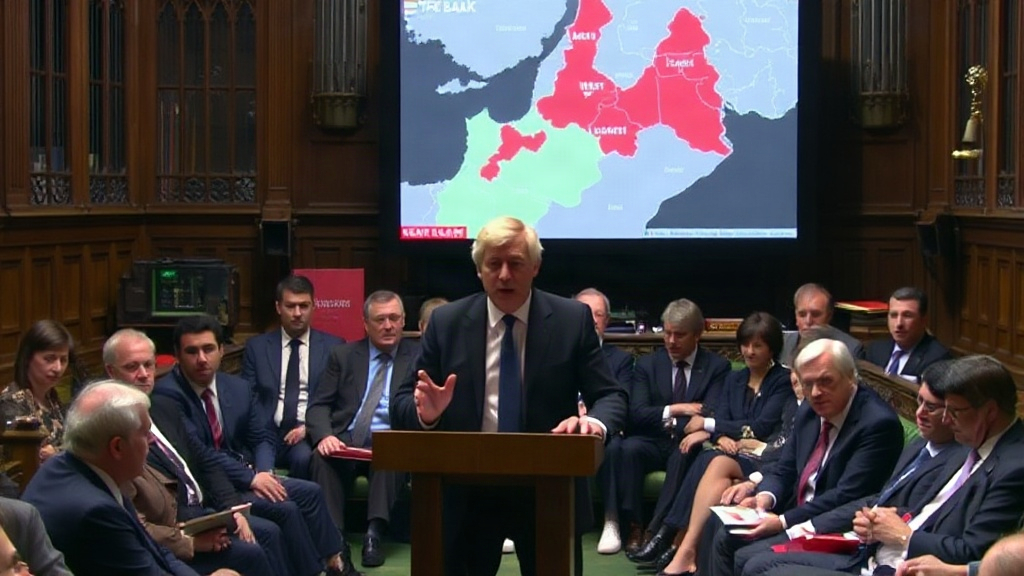
The remarks came during a heated session of UK politics live coverage, where Miliband responded to questions about escalating settler violence and displacement of Palestinian communities. He did not mince words: the pattern of attacks, forced evictions, and land confiscation amounted to ethnic cleansing. It was a term that has long been avoided by Western diplomats, but its use signals a significant shift in tone from London. However, the practical response, a ban on trade with illegal Israeli settlements, is mired in legislative and bureaucratic hurdles that could stretch implementation well into next year.
What Miliband Actually Said
During the session, Miliband was pressed on whether the government recognized the severity of the situation on the ground. His response was unambiguous. He described settler terror attacks as part of a broader campaign that, when combined with government backing for settlement expansion and the displacement of Palestinian families, constituted ethnic cleansing. This is not a phrase used lightly in international law, and its deployment by a sitting British foreign secretary carries considerable weight.
Miliband's words were not an isolated outburst. They follow months of growing concern within the Foreign Office about the deteriorating human rights situation in the West Bank. Reports from the United Nations and various NGOs have documented a sharp rise in settler violence, including arson, vandalism, and physical assaults, often carried out with the apparent protection of Israeli security forces. The UK has previously condemned such actions, but the explicit use of the term ethnic cleansing marks a new threshold.
The Sanctions Delay: Why Nine Months?
Despite the strong language, the government's proposed sanctions face a lengthy implementation timeline. According to officials, the process of drafting, consulting on, and enacting legislation to ban trade with Israeli settlements could take up to nine months. This is due to a combination of legal complexities, the need for parliamentary approval, and the desire to coordinate with European and international partners.
Critics argue that this delay undermines the credibility of the UK's stance. If the government truly believes ethnic cleansing is occurring, they ask, why allow nine more months of economic engagement with the entities perpetrating it? The answer, according to insiders, lies in the delicate balancing act between moral condemnation and diplomatic pragmatism. The UK maintains strong ties with Israel and is wary of taking unilateral action that could isolate it from key allies or jeopardize its role in regional security discussions.
Legal and Parliamentary Hurdles
Any move to ban trade with Israeli settlements requires primary legislation. That means drafting a bill, holding consultations, and securing time in a crowded parliamentary calendar. The government also faces pressure from pro-Israel lobbying groups and some MPs who argue that such sanctions would be counterproductive and unfair. These domestic political considerations add further delay.
Moreover, the UK is not acting in a vacuum. The European Union has debated similar measures for years without reaching consensus. London may be waiting to see if other nations will follow suit, thereby reducing the risk of being singled out. This multilateral approach is often praised for its effectiveness, but it also slows down the process considerably.
Reaction from Opposition and Human Rights Groups
The Liberal Democrats, who have long campaigned for tougher action on Israeli settlements, seized on the delay. They have been granted an urgent question in the Commons to demand clarity on the timeline and to push for immediate interim measures. Their leader argued that waiting nine months is unacceptable when lives are at stake and that the government should use existing powers to restrict trade immediately.
Human rights organizations echoed these concerns. Amnesty International and Human Rights Watch have both called for an immediate ban on all trade with settlements, arguing that any delay provides economic support to a system that violates international law. They point out that the UK already has a legal obligation under the Fourth Geneva Convention not to aid or assist in the transfer of its own civilian population into occupied territory, and that continuing trade with settlements arguably breaches that obligation.
Israel's Response and International Implications
Unsurprisingly, the Israeli government reacted sharply to Miliband's comments. President Isaac Herzog warned that Britain would be "on the wrong side of history" if it proceeded with the sanctions. Israeli officials have consistently denied that their policies amount to ethnic cleansing, arguing that they are simply enforcing security measures and building housing in areas they claim are legally theirs.
The diplomatic row adds another layer of tension to an already fraught relationship. The UK has historically been one of Israel's staunchest allies in Europe, but recent governments have taken a more critical stance, particularly regarding settlement expansion. This latest episode could further strain ties and complicate cooperation on intelligence and security matters.
Beyond bilateral relations, the UK's position could influence other countries. If London follows through with sanctions, it may encourage other European nations to do the same. Conversely, if the sanctions are seen as toothless or endlessly delayed, it could embolden those who believe that strong words are enough.
What Happens Next?
In the short term, the focus will be on the urgent question in the Commons and any subsequent government statements. MPs will demand a clear timeline and interim measures. The government may announce smaller, symbolic steps, such as increased scrutiny of imports or visa restrictions on individuals involved in settler violence, to show that it is not sitting idle.
In the longer term, the legislative process will grind forward. Public pressure, media coverage, and developments on the ground will all play a role in shaping the final outcome. If settler violence continues to escalate, the calls for immediate action will grow louder, and the government may be forced to accelerate its plans.
Frequently Asked Questions
What exactly did Miliband say about ethnic cleansing in the West Bank?
Miliband stated that the actions of Israeli settlers, including terror attacks and forced displacement of Palestinians, amounted to ethnic cleansing. He used the term in a formal parliamentary setting, marking a significant escalation in the UK's official language regarding the conflict.
Why will the UK sanctions take up to nine months to implement?
The sanctions require new legislation, which involves drafting a bill, holding consultations, and securing parliamentary time. The government also wants to coordinate with international partners, and faces domestic political opposition, all of which contribute to the delay.
What kind of sanctions is the UK planning?
The UK is planning to ban trade with Israeli settlements in the West Bank, which are considered illegal under international law. This would prohibit the import of goods produced in settlements and potentially restrict financial transactions with settlement-based businesses.
How has Israel responded to Miliband's comments?
Israeli President Isaac Herzog said Britain would be "on the wrong side of history" if it proceeded with the sanctions. Israeli officials deny that their policies constitute ethnic cleansing and argue that the settlements are legal and necessary for security.
Can the UK impose sanctions faster using existing powers?
Some legal experts argue that the government could use existing trade and customs regulations to impose restrictions more quickly, but officials maintain that comprehensive sanctions require new legislation. There is ongoing debate about whether interim measures are feasible.