
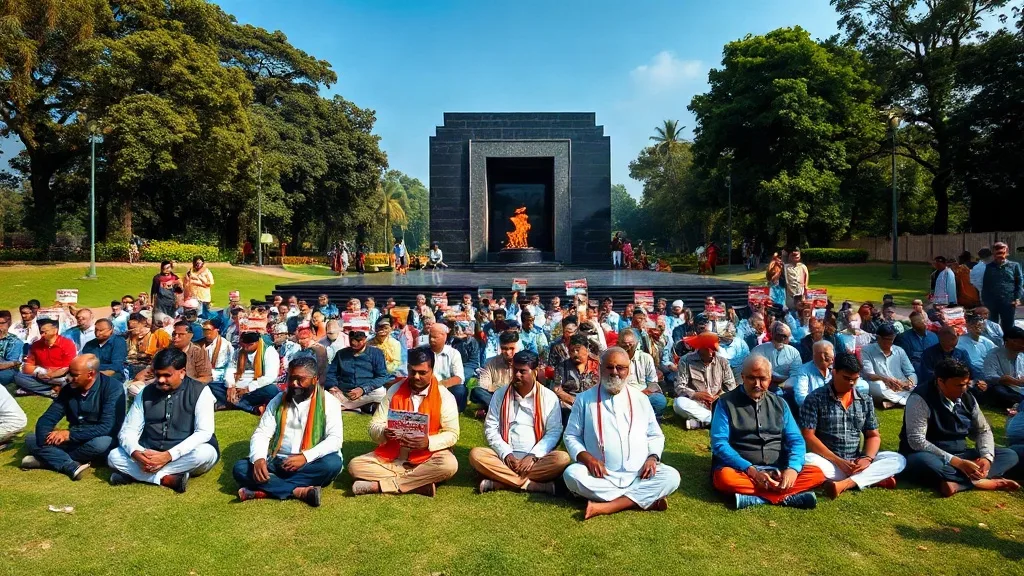
In a dramatic escalation of political tensions, leaders from the INDIA bloc gathered at Rajghat, the memorial of Mahatma Gandhi, on Tuesday to stage a sit-in protest against the government's appointment of the new Chief Election Commissioner (CEC). The move comes amid growing concerns over the independence of the Election Commission of India (ECI) and sets the stage for a fierce battle over electoral integrity ahead of the 2024 general elections.
The protest, led by prominent opposition figures, is the latest in a series of demonstrations against the appointment process, which critics argue undermines the neutrality of the poll body. The choice of Rajghat as the venue is symbolic, invoking Gandhi's ideals of truth and non-violent resistance against what the opposition terms an assault on democratic institutions.
Context: The CEC Appointment Controversy
The controversy erupted after the government appointed a new CEC without consulting the opposition, a move that opposition parties claim violates the spirit of the Constitution. The Chief Election Commissioner and Other Election Commissioners (Appointment, Conditions of Service and Term of Office) Act, 2023, which governs the appointment process, has been a flashpoint since its inception. The Act established a selection committee comprising the Prime Minister, the Leader of the Opposition, and a Union Cabinet Minister, but the opposition alleges that the committee's recommendations were ignored.
The INDIA bloc, a coalition of opposition parties formed to challenge the ruling Bharatiya Janata Party (BJP) in the upcoming elections, has seized on the issue as a rallying cry. They argue that a compromised Election Commission could tilt the playing field in favor of the incumbent government, undermining the very foundation of Indian democracy.
The Rajghat Sit-In: A Symbolic Protest
The sit-in at Rajghat, which began in the morning, saw leaders from various opposition parties, including the Congress, Trinamool Congress, Dravida Munnetra Kazhagam (DMK), and others, sitting in silent protest. The atmosphere was somber yet resolute, with leaders holding placards that read "Save Democracy" and "Hands Off Election Commission." The choice of Rajghat, where Gandhi's cremation took place, added a moral weight to the protest, reminding the government of the principles of justice and fairness that Gandhi championed.
Speaking to the media, a senior opposition leader stated, "We are here not just to protest an appointment but to defend the right of every Indian to free and fair elections. The government must listen to the voice of the people." The protest was largely peaceful, with no reports of clashes, but the political temperature has certainly risen.
Why This Matters: The Battle for Electoral Integrity
The independence of the Election Commission is a cornerstone of India's democracy. The ECI is responsible for conducting elections at all levels, from panchayats to Parliament, and its credibility is essential for public trust. The appointment of the CEC and other election commissioners is a critical process that should ideally be transparent and bipartisan.
The current row has sparked a broader debate about the politicization of key institutions. The opposition contends that the government is systematically undermining institutions like the ECI, the judiciary, and the media to consolidate power. The ruling party, on the other hand, defends its appointments as lawful and necessary for efficient governance.
This protest at Rajghat is not an isolated event; it is part of a larger strategy by the INDIA bloc to highlight what they see as threats to democracy. With general elections approaching, the opposition is keen to project a united front and mobilize public opinion against the government.
Student Organizations Join the Fray
The protest has also galvanized student and civil society groups. The CJP's Dipke, AISA, and other student organizations have called for united mobilization against the CEC appointment, announcing their own protest at Jantar Mantar on October 10. This indicates that the issue resonates beyond political circles and has the potential to spark wider agitation.
Student leaders argue that the future of the country is at stake and that they have a right to demand a fair electoral process. Their involvement could inject new energy into the opposition's campaign and bring younger voters into the fold.
Possible Implications: What Lies Ahead?
The sit-in at Rajghat is likely to have several implications. First, it will intensify the political discourse around electoral reforms and the independence of the ECI. Second, it may lead to further protests and demonstrations across the country, potentially disrupting the government's agenda. Third, it could influence public opinion, especially if the opposition effectively communicates its message.
However, the government has shown no signs of backing down. It has dismissed the opposition's concerns as politically motivated and asserted that the appointment was made in accordance with the law. The BJP has also accused the opposition of undermining the institutions by questioning their integrity.
The coming weeks will be crucial. If the opposition can sustain the momentum and attract larger crowds, it could force the government to reconsider its stance. But if the protests fizzle out, the government may feel emboldened to proceed with its agenda.
Public Reaction and Media Coverage
The protest has garnered significant media attention, with debates on news channels and social media trending. Public reaction has been mixed. Some view the opposition's protest as a necessary stand for democracy, while others see it as political theater ahead of elections. The government's supporters argue that the opposition is creating a false narrative to hide its own shortcomings.
In the midst of this, the ECI has maintained a stoic silence, stating that it will continue to perform its duties impartially. The commission's credibility is on the line, and how it handles the upcoming elections will be closely watched.
Frequently Asked Questions
What is the CEC appointment row about?
The row is about the appointment of the new Chief Election Commissioner by the government without consulting the opposition, which critics say compromises the independence of the Election Commission. The opposition demands a transparent and bipartisan process.
Why did INDIA bloc leaders choose Rajghat for their sit-in?
Rajghat is the memorial of Mahatma Gandhi, symbolizing truth and non-violent resistance. The choice underscores the opposition's claim that they are fighting for democratic principles and justice.
How could this protest affect the 2024 elections?
If the protest gains traction, it could galvanize opposition unity and voter awareness, potentially impacting the election outcome. It also puts pressure on the government to address concerns about electoral integrity.
What are the student organizations planning?
Student groups like CJP's Dipke and AISA have announced a protest at Jantar Mantar on October 10 to demand a fair CEC appointment and united mobilization against the government's move.
Has the government responded to the protest?
The government has dismissed the opposition's concerns as politically motivated, stating that the appointment was made in accordance with the law. It has not indicated any willingness to reverse the decision.