
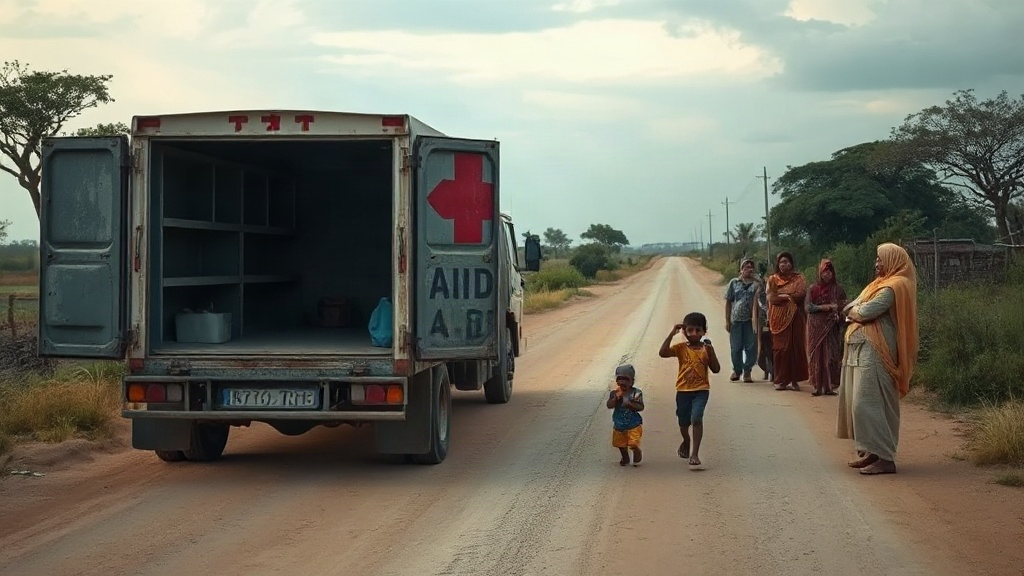
Imagine a mother in a conflict zone who relies on monthly food parcels to feed her children. One day, the truck does not come. No explanation, no alternative. That is the reality for tens of millions of people right now. The global humanitarian aid system is quietly collapsing under the weight of funding cuts, political indifference, and a dangerous shift in how wars are fought. Last year alone, 64 million fewer people received assistance compared to the year before. That is not just a number; it is a staggering human tragedy unfolding in real time.
The latest State of the Humanitarian System 2026 report paints a grim picture. Contributions to humanitarian aid dropped by 30 percent between 2022 and 2025. Thousands of aid workers have lost their jobs. The system that was built after the Second World War to save lives in crises is now facing one of its biggest contractions in history. The reasons are complex, but the outcome is simple: more suffering, less help.
Why is humanitarian aid shrinking so fast?
The most obvious factor is money. Donor governments are cutting budgets. Some are redirecting funds to domestic priorities or military spending. Others are using aid as a political weapon, attaching conditions that make it harder to deliver help where it is needed most. The war in Ukraine, the conflict in Gaza, and the crisis in Sudan have all strained resources, but the response has not been to increase funding; it has been to ration it.
At the same time, the nature of conflict has changed. Aid workers are no longer seen as neutral. In many places, they are targets. Hospitals, schools, and food convoys are bombed. Governments and armed groups block access to populations in need. The report highlights that governments are not only failing to protect civilians but are increasingly responsible for endangering them. When humanitarian corridors are closed and aid workers are killed, the system cannot function.
The domino effect of funding cuts
When funding drops, the first things to go are prevention and early response. Food rations are reduced. Health clinics close. Water and sanitation projects are delayed. This creates a domino effect: a child who does not get treated for malnutrition today will need far more expensive care later. A community that loses access to clean water will face disease outbreaks that cost more to contain. The cuts are not just cruel; they are economically short-sighted.
Women and children are hit hardest. In many cultures, women eat last and least. When food is scarce, girls are pulled out of school to help at home or married off early. Older people and those with disabilities are often forgotten entirely. The report specifically notes that these groups have been disproportionately affected by the cuts. It is a quiet form of discrimination that rarely makes headlines.
What does this mean for the future of aid?
The humanitarian system is not just about emergency response. It is about dignity. It is about the belief that when disaster strikes, the world will come together to help. That belief is eroding. If the current trend continues, we could see a future where humanitarian aid is reserved only for the most visible crises, while forgotten emergencies in places like the Sahel or Myanmar receive nothing.
There is also a deeper question about the structure of aid itself. For decades, the system has been dominated by large international organizations and Western donors. Some critics argue that this model is outdated. They call for more funding to go directly to local organizations that understand the context and can act quickly. The report does not shy away from this debate. It suggests that the contraction might force a long-overdue reform, but warns that reform without resources is just an excuse for inaction.
Real stories behind the statistics
Behind every statistic is a person. Consider a camp in northern Ethiopia where aid distributions were cut by half last year. A grandmother who cares for five grandchildren told aid workers she now skips meals so the children can eat. In Afghanistan, a midwife lost her job when a clinic closed due to funding gaps. Now women in her village have to travel hours to give birth in unsafe conditions. These are not hypothetical scenarios; they are the daily reality of a system in freefall.
Aid workers themselves are also victims. Many have lost their jobs in the past year. Those who remain often work without pay for months. They face burnout, trauma, and the constant fear of being targeted. When experienced staff leave, they take with them the knowledge and relationships that make aid effective. Rebuilding that capacity will take years, even if funding returns tomorrow.
What can be done?
The report is not without hope. It outlines several steps that could reverse the decline. First, donors must honor their commitments. The gap between pledges and actual funding is a scandal that gets too little attention. Second, aid must be more flexible. Money tied to specific projects or geographies often cannot be moved when needs change. Third, the safety of aid workers must be a non-negotiable priority. Without security, there is no access. Without access, there is no aid.
There is also a role for the private sector and for individuals. Companies that profit from crisis-affected regions have a responsibility to contribute. Ordinary people can support local charities that are often more efficient than large bureaucracies. But ultimately, the solution is political. Governments must decide that saving lives is worth the money. So far, they have not.
Frequently Asked Questions
What caused the 30 percent drop in humanitarian aid funding?
The drop is due to a combination of donor fatigue, shifting political priorities, and economic pressures at home. Some governments have cut foreign aid budgets, while others have redirected funds to military or domestic programs. The result is a significant shortfall in the resources available for humanitarian response.
How does the decline in aid affect women and children specifically?
Women and children are often the most vulnerable in crises. When food aid is reduced, women may eat less to feed their children. Girls are more likely to be taken out of school or forced into early marriage. Pregnant women and new mothers lose access to health services, leading to higher mortality rates. Children suffer from malnutrition and preventable diseases.
Are local aid organizations better equipped to handle the crisis?
Many experts believe that local organizations are more agile and have deeper community trust. They can often deliver aid faster and at lower cost. However, they lack the funding and infrastructure of large international agencies. A shift toward more direct funding for local groups could improve efficiency, but it requires donors to change long-standing practices.
What can ordinary people do to help address the humanitarian aid crisis?
Individuals can support reputable local and international charities, advocate for increased government funding, and raise awareness about forgotten crises. Even small donations to grassroots organizations can make a difference. Voting for leaders who prioritize humanitarian aid is another powerful tool.
Is there any chance the humanitarian system will recover in the coming years?
Recovery is possible but not guaranteed. It depends on whether donor governments reverse their funding cuts and whether the international community recommits to protecting civilians and aid workers. The system has faced crises before and adapted. But the current contraction is unprecedented in scale, and without urgent action, the damage could be permanent.