
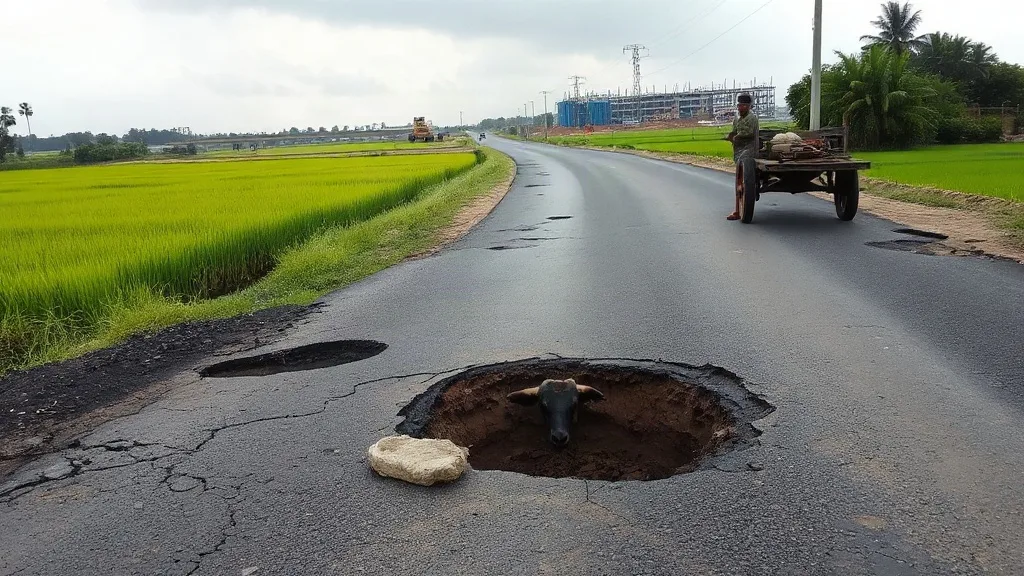
In the quiet villages around Bhogapuram, in the north coastal Andhra Pradesh district of Vizianagaram, the morning routine has changed. Farmers who once walked a few hundred metres to their paddy fields now stand at the edge of broken asphalt, wondering how to get across. The culprit: a steady stream of heavy trucks and earthmovers linked to the construction of the new Bhogapuram International Airport. What was once a network of narrow but serviceable rural roads is now a patchwork of craters, exposed culverts, and muddy trenches. For the people who live here, the airport promises future connectivity, but today it has delivered isolation.
A Project That Promised Progress
The Bhogapuram airport is one of Andhra Pradesh's flagship infrastructure projects, designed to serve the growing coastal belt between Visakhapatnam and Srikakulam. Officials have long argued that the airport will bring jobs, trade, and tourism. But for the villages in its immediate vicinity, the construction phase has been a daily struggle. The same roads that were supposed to benefit from the project are now the ones bearing the brunt of it. Locals say that the damage is not just an inconvenience; it is a threat to their livelihoods.
Farmers Cut Off from Their Fields
Agriculture is the backbone of this region. Paddy, sugarcane, and pulses are grown in the fields that surround the villages. During the construction season, farmers need to access their plots regularly for planting, irrigation, and harvesting. But with the roads damaged, many are unable to reach their fields at all. "My field is just two kilometres away, but I have to take a five-kilometre detour because the direct road is completely broken," says one farmer from a nearby village. "By the time I get there, half the day is gone. How can I farm like this?"
The problem is compounded during the monsoon. Rainwater fills the craters, turning them into small ponds. Tractors and bullock carts get stuck. Even walking becomes hazardous. Some farmers have resorted to carrying their tools and seedlings on their heads, wading through mud. Others have simply abandoned their fields for the season, leading to a loss of income and food security for their families.
Passengers Struggle to Reach the Highway
It is not only farmers who are affected. Residents who need to travel to Visakhapatnam or other nearby towns for work, education, or medical care say that the service roads have become unusable. The airport construction has blocked several access points, and passengers now have to travel an additional eight kilometres to reach the nearest highway. For daily wage workers, that extra distance means extra time and money, often eating into their already meagre earnings.
"My daughter goes to college in Vizianagaram. She used to catch a bus right outside our village. Now she has to walk three kilometres to the main road, then wait for a bus that may or may not come on time," says a mother of two. "We are not against the airport. But we need roads too."
What the Authorities Say
When contacted, local officials acknowledged the problem but pointed to the scale of the project. "The airport is a mega project. Some temporary inconvenience is inevitable. We are trying to ensure that alternate routes are available," said a district administration official who did not wish to be named. However, villagers claim that no proper alternate routes have been provided. They say that the construction company has not repaired the roads it damaged, and that repeated complaints to the panchayat and the mandal office have gone unanswered.
Experts in rural infrastructure note that this is a common pattern in large infrastructure projects. "Construction traffic is heavy and often exceeds the load-bearing capacity of rural roads. Without proper planning and timely repair, the damage becomes permanent," says an engineer who has worked on similar projects. "The solution is to build diversion roads before construction begins and to set aside funds for restoration."
Health and Safety Concerns
The damaged roads are also a health hazard. Ambulances cannot reach some villages quickly, and pregnant women have had to be carried on makeshift stretchers to the main road. In one incident, a delay caused by a broken culvert led to a critical patient being taken to a hospital in Visakhapatnam more than an hour late. While no fatalities have been reported, the risk is real and growing.
Children walking to school face similar dangers. With no proper footpaths, they share the narrow, broken roads with trucks and other vehicles. Parents have started escorting their children, which means additional time away from work.
What Can Be Done?
The situation calls for immediate action. Here are a few steps that could ease the crisis:
- Immediate road repair: The construction company should be held accountable for restoring the roads it has damaged. This includes grading, filling potholes, and rebuilding culverts.
- Alternate routes: Before any further construction, proper diversion roads should be laid out and maintained. These should be accessible to ambulances and other emergency vehicles.
- Community consultation: Villagers should be involved in planning. They know the terrain and can suggest the most practical routes.
- Compensation for farmers: Those who have lost crops or income due to inaccessible fields should be compensated. This would require a proper survey and transparent disbursement.
- Long-term planning: Future infrastructure projects must include a road restoration plan from the outset, with a dedicated budget.
The Bigger Picture
Bhogapuram is not an isolated case. Across India, large infrastructure projects often leave a trail of broken roads and disrupted lives. The rush to build airports, highways, and industrial corridors sometimes overlooks the basic needs of the people who live in the project area. While development is essential, it should not come at the cost of the very communities it aims to serve.
For the villagers of Bhogapuram, the airport is a symbol of hope and frustration. They want to see it succeed, but they also want to be able to reach their fields, their schools, and their hospitals. As one elderly farmer put it, "We are not against progress. But progress should not mean we are trapped in our own homes."
Frequently Asked Questions
Why are the roads around Bhogapuram airport damaged?
The roads are damaged primarily due to heavy construction traffic, including trucks carrying materials and earthmovers. These vehicles exceed the load capacity of the rural roads, causing cracks, potholes, and structural failures.
How are farmers affected by the damaged roads?
Farmers cannot reach their fields easily, leading to delays in planting and harvesting. Some have abandoned their crops for the season, resulting in income loss and food insecurity for their families.
What do residents say about the detour to the highway?
Residents report that they now have to travel an extra eight kilometres to reach the nearest highway, which increases travel time and cost, especially for daily wage workers and students.
Are there any plans to repair the roads?
Officials have acknowledged the issue but have not announced a concrete repair plan. Villagers are demanding immediate action and accountability from the construction company and local authorities.
How can the situation be improved?
Immediate repair of damaged roads, creation of alternate routes, community involvement in planning, and compensation for affected farmers are some of the steps that could help. Long-term, infrastructure projects should include road restoration plans from the start.