
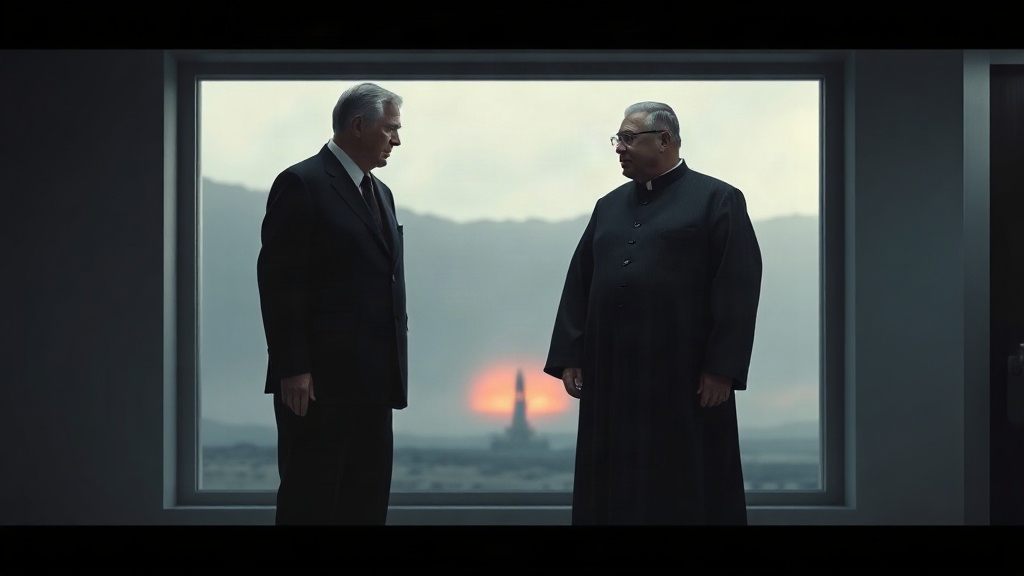
In a remark that has startled diplomats and analysts alike, former President Donald Trump recently stated that it is acceptable for North Korean leader Kim Jong Un to possess nuclear weapons, citing a personal rapport: "He likes me." The comment, made during a public appearance, underscores Trump's unconventional approach to international relations, where personal chemistry often trumps traditional diplomatic protocols. While Trump's supporters argue that his relationship with Kim helped reduce tensions during his presidency, critics warn that such statements undermine decades of nonproliferation efforts and could embolden Pyongyang's nuclear ambitions.
Trump's assertion comes amid heightened global concerns over North Korea's expanding nuclear program. In recent months, Pyongyang has conducted multiple missile tests and signaled that it has no intention of denuclearizing. The Biden administration has pursued a more conventional approach, emphasizing deterrence and alliance coordination. Trump's latest remark, however, signals a potential return to the personal diplomacy that defined his earlier interactions with Kim, including three high-profile summits. But does a personal bond justify accepting a nuclear-armed North Korea? The answer is far from simple.
The Context: From Fire and Fury to Love Letters
To understand Trump's comment, it's essential to recall the rollercoaster history of US-North Korea relations during his tenure. In 2017, Trump threatened "fire and fury" in response to North Korean missile tests, and Kim called Trump a "dotard." Yet by 2018, the two leaders had exchanged warm letters and held a historic summit in Singapore. Trump described them as "in love," and Kim reportedly expressed a desire to improve ties. The bromance yielded no concrete denuclearization but did reduce tensions and halt major provocations for a period.
Trump's critics argue that the summits legitimized Kim on the world stage without securing any meaningful concessions. North Korea continued to develop its nuclear program, and by the end of Trump's term, Pyongyang had expanded its arsenal. Nevertheless, Trump maintains that his personal approach prevented war. His recent statement that Kim can keep nuclear weapons because "he likes me" reflects a transactional view of alliances and a belief that personal relationships can override structural conflicts.
Why This Matters: Security Implications
North Korea's nuclear arsenal is not just a regional issue; it poses a direct threat to the United States and its allies. A nuclear-armed North Korea with a reliable intercontinental ballistic missile (ICBM) capability could potentially strike the US mainland. Accepting this reality without any arms control agreement would be a significant shift in US policy, which has long demanded complete, verifiable, and irreversible denuclearization.
Moreover, Trump's comment could undermine the nonproliferation regime. If the US appears to tolerate North Korea's nuclear status, other countries might feel emboldened to pursue their own nuclear weapons, leading to a cascade of proliferation. South Korea and Japan, both within range of North Korean missiles, might reconsider their own nuclear options, despite being protected by the US nuclear umbrella. Such a scenario would destabilize Northeast Asia and increase the risk of conflict.
The Art of the Deal: Does Personal Diplomacy Work?
Trump's approach is rooted in his belief that personal relationships can solve intractable problems. He often cites his rapport with Kim as evidence that his method works. However, diplomacy is not a reality TV show; it requires sustained engagement, institutional frameworks, and verification mechanisms. Personal chemistry can open doors, but it cannot replace the painstaking work of negotiators and inspectors.
History offers mixed lessons. Ronald Reagan's personal rapport with Mikhail Gorbachev helped pave the way for arms control treaties, but those agreements were the result of years of detailed negotiations. Similarly, Trump's summits with Kim produced a vague statement in Singapore but no timeline or specifics for denuclearization. Without follow-through, personal diplomacy can create illusions of progress while the underlying threat persists.
What Trump's Supporters Say
Supporters of the former president argue that his comment is being taken out of context. They point out that Trump has consistently said he wants North Korea to denuclearize, but he also recognizes that Kim is unlikely to give up his weapons voluntarily. By maintaining a friendly relationship, Trump believes he can influence Kim's behavior and prevent miscalculation. They also note that no new nuclear tests or ICBM launches occurred during Trump's presidency after the initial period, suggesting that his approach had a deterrent effect.
Furthermore, some analysts argue that North Korea will never give up its nuclear weapons, and the US must learn to live with a nuclear-armed North Korea. In this view, Trump's realism is preferable to the unrealistic demands of the past. Managing the threat through deterrence and dialogue, they say, is more practical than insisting on denuclearization.
The Risks of Accepting a Nuclear North Korea
Yet accepting North Korea as a nuclear state carries enormous risks. It could trigger a nuclear arms race in Asia, undermine the Nuclear Non-Proliferation Treaty (NPT), and weaken US credibility with allies. It could also embolden Kim to engage in more aggressive behavior, knowing that his nuclear arsenal protects him from retaliation. The international community has imposed harsh sanctions on North Korea, but these have not stopped its nuclear progress. A policy of acceptance would render those sanctions meaningless.
Additionally, Trump's comment may complicate efforts by the current administration to coordinate with allies. South Korea and Japan are already anxious about North Korea's growing capabilities. If the US signals that it is willing to tolerate a nuclear North Korea, these allies may doubt America's commitment to their security. That could lead to calls for independent nuclear deterrents, which would further destabilize the region.
Conclusion: Personal Politics vs. Global Security
Trump's statement that Kim Jong Un can have nuclear weapons because "he likes me" encapsulates the former president's belief in personal diplomacy. While his relationship with Kim may have reduced tensions temporarily, it did not achieve denuclearization. Accepting a nuclear North Korea would be a radical departure from longstanding US policy and could have dangerous consequences for global security. As the world grapples with multiple crises, the North Korean nuclear issue remains one of the most complex and urgent challenges. Whether through personal rapport or multilateral pressure, the goal of a denuclearized Korean Peninsula must remain a priority.
Frequently Asked Questions
What exactly did Trump say about Kim Jong Un and nuclear weapons?
During a recent public appearance, Trump said that it is fine for Kim Jong Un to have nuclear weapons because "he likes me." He suggested that his personal relationship with Kim prevents conflict and that North Korea's nuclear arsenal is not a threat as long as he is in charge.
Did Trump's diplomacy with Kim Jong Un reduce North Korea's nuclear threat?
Trump's summits with Kim reduced tensions and halted major provocations for a period, but North Korea continued to expand its nuclear arsenal. No concrete denuclearization was achieved, and the threat remains.
How has the Biden administration handled North Korea?
The Biden administration has pursued a more traditional approach, emphasizing deterrence, sanctions, and coordination with allies. It has offered dialogue but rejected the idea of accepting North Korea as a nuclear state.
What are the risks of accepting North Korea as a nuclear power?
Accepting North Korea as a nuclear state could trigger a regional arms race, undermine the NPT, weaken US alliances, and embolden Pyongyang. It would also make denuclearization even more difficult in the future.