
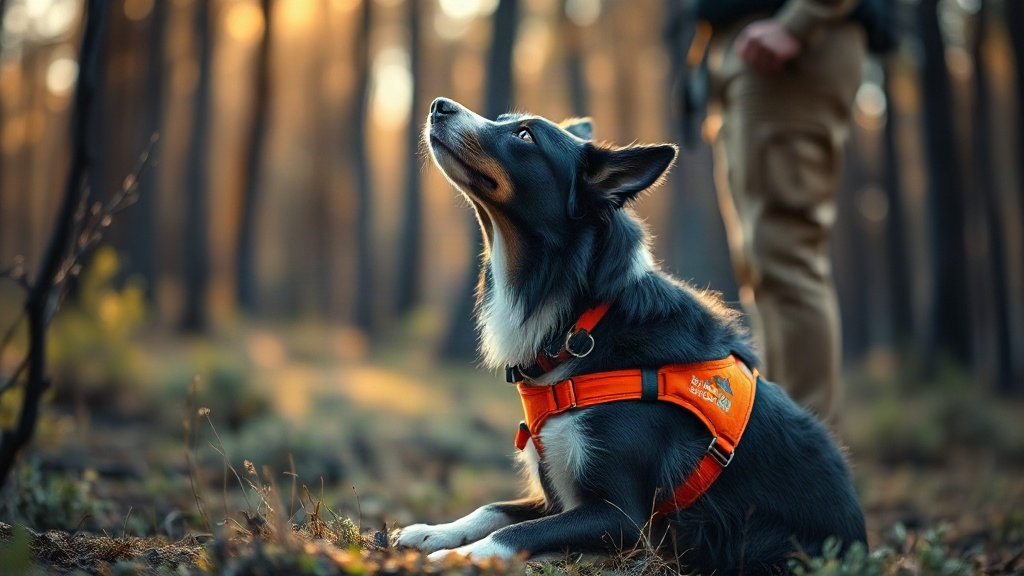
The devastating bushfires that swept through Australia in 2019-2020 left an indelible mark on the nation's wildlife, with an estimated three billion animals killed or displaced. Among the most iconic victims were koalas, whose populations were already under pressure from habitat loss and disease. In the aftermath, stories of heroic rescues emerged, none more heartwarming than that of a four-legged savior: a dog trained to sniff out koalas in the charred landscape, credited with saving over 100 of the marsupials. Now, after an extensive search, a new dog has been chosen to take up the mantle, ensuring that this vital work continues.
The Legacy of the Original Koala Detection Dog
The original koala detection dog, whose name has become synonymous with hope in the face of ecological disaster, was a border collie-koolie cross named Bear. Bear's exceptional nose and unwavering focus made him a superstar in the field of conservation detection. He was trained by the University of the Sunshine Coast's Detection Dogs for Conservation program, which uses rescued dogs to locate endangered species. During the 2019-2020 fires, Bear and his handler worked tirelessly, navigating burnt terrain to find koalas in need of medical attention. His efforts directly led to the rescue and treatment of numerous koalas, many of whom would have otherwise perished.
Bear's success wasn't just a feel-good story; it was a proof of concept. It demonstrated that detection dogs could be a game-changer in wildlife rescue, especially in the chaotic aftermath of natural disasters. The program's scientific approach, combining rigorous training with an understanding of animal behavior, set a new standard for conservation efforts. Bear's retirement in 2021 left a void, but also an opportunity to build on his legacy.
The Search for a Worthy Successor
Finding a dog with the right stuff is no small feat. The ideal candidate needs more than just a good nose; they require boundless energy, intense focus, and a friendly disposition. They must be able to work in challenging environments, from dense forests to charred remains, and remain undistracted by other wildlife or scents. The selection process, led by the same organization that trained Bear, involved evaluating dozens of rescue dogs from shelters across Australia. Candidates underwent a series of tests to assess their scent discrimination, stamina, and responsiveness to handlers.
After months of searching, the team finally found their paw-fect match. The new dog, whose name is yet to be announced publicly, is a two-year-old border collie with a remarkable drive to work. According to the trainers, this dog displayed an innate ability to locate hidden objects and an eagerness to please that reminded them of Bear in his prime. The dog was rescued from a shelter, giving it a second chance at life while offering a second chance to countless koalas.
Training the Next Generation
Training a detection dog is a meticulous process that can take six to twelve months. The new recruit will learn to recognize the scent of koala scat and fur, which are indicators of the animal's presence. Initial training takes place in controlled environments, where the dog is rewarded for finding hidden samples. Gradually, the difficulty increases, with distractions and more complex scenarios introduced. Eventually, the dog will be ready for fieldwork, working alongside handlers in real-world conservation settings.
The training isn't just about finding koalas; it's also about ensuring the dog's safety and well-being. Handlers are trained to read the dog's body language and to provide rest and hydration in tough conditions. The bond between dog and handler is crucial, built on trust and mutual respect. This relationship is at the heart of the program's success, allowing the team to work efficiently and ethically.
Why This Matters for Koala Conservation
Koalas are facing a crisis. Before the 2019-2020 fires, their numbers were already declining due to habitat destruction, climate change, and disease. The fires killed thousands and destroyed vast areas of eucalyptus forest, the koala's primary habitat and food source. In the aftermath, rescue efforts were hampered by the sheer scale of the disaster and the difficulty of locating survivors in inaccessible terrain. Detection dogs like Bear proved invaluable, but they are just one tool in a larger conservation toolkit.
The new dog will not only aid in future emergencies but also contribute to ongoing research. By locating koalas and their scat, the dog helps scientists gather data on population health, distribution, and genetics. This information is critical for developing effective conservation strategies, from habitat restoration to disease management. The program also raises public awareness, shining a spotlight on the plight of koalas and the innovative methods being used to save them.
The Science Behind Detection Dogs
Detection dogs have been used in conservation for decades, but their deployment for koalas is relatively new. The science is simple yet powerful: dogs have an olfactory system up to 100,000 times more sensitive than humans, allowing them to detect scents at incredibly low concentrations. In the case of koalas, the dogs are trained to alert to the scent of koala scat, which is often the only sign of the animal's presence in dense bushland. This non-invasive method allows researchers to monitor koalas without disturbing them.
Studies have shown that detection dogs can be more effective and efficient than human surveyors, especially in rugged terrain. They cover more ground in less time and with greater accuracy. The University of the Sunshine Coast's program has refined these methods, publishing research on the effectiveness of detection dogs for koalas and other species. The new dog will add to this body of knowledge, helping to optimize search strategies and training techniques.
The Road Ahead
As the new dog begins its training, the organization is also working to expand its capacity. The goal is to have a team of detection dogs ready to respond to emergencies across Australia. This requires funding, volunteers, and public support. The story of Bear captured hearts worldwide, and the new dog is already generating interest. The organization hopes to leverage this attention to secure resources for long-term conservation efforts.
For now, the focus is on building a strong foundation for the new recruit. The trainers are careful not to rush the process, ensuring that the dog is physically and mentally prepared for the challenges ahead. If all goes well, the dog will be operational within a year, ready to follow in Bear's paw prints. The legacy of the original koala rescue dog lives on, not just in memory but in action.
Frequently Asked Questions
What breed is the new koala rescue dog?
The new koala rescue dog is a two-year-old border collie, chosen for its intelligence, energy, and strong scent detection abilities. Border collies are often used as detection dogs due to their work ethic and trainability.
How are koala detection dogs trained?
Training involves teaching the dog to associate the scent of koala scat or fur with a reward, such as a toy or treat. Starting in controlled environments, the dog progresses to more complex outdoor settings. The process emphasizes positive reinforcement and builds a strong bond between dog and handler.
Can detection dogs find koalas during bushfires?
Yes, detection dogs can work in post-fire landscapes, locating koalas that have survived. They are trained to navigate burnt terrain and can detect scents even amidst ash and debris. Their ability to cover large areas quickly makes them invaluable in emergency response.
How can the public support koala conservation?
Supporting organizations that train detection dogs is one way. Donations help cover training, equipment, and fieldwork costs. Additionally, advocating for habitat protection and climate action addresses the root causes of koala decline. Every effort counts in ensuring a future for these iconic animals.