
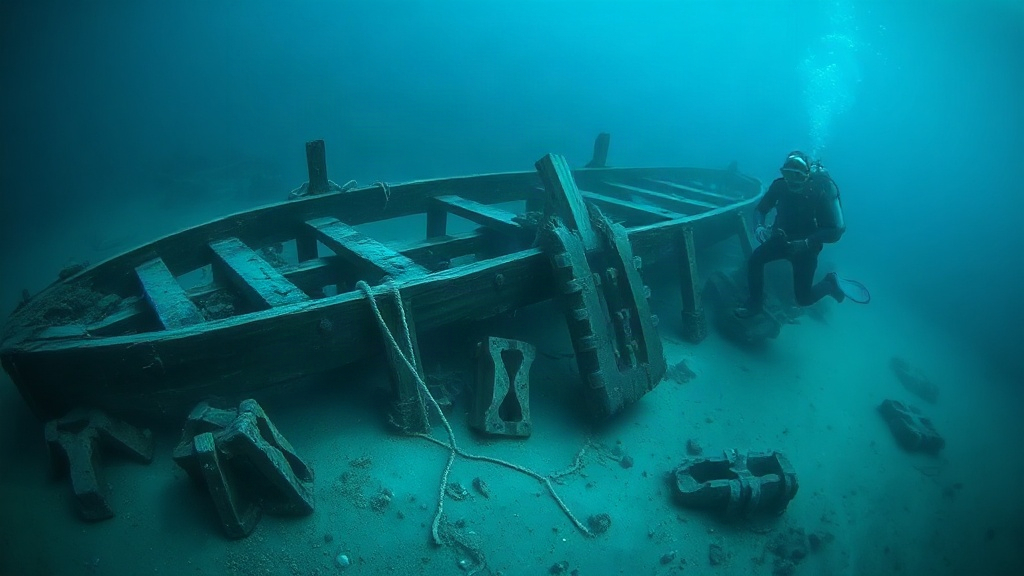
In the shallow, sheltered waters of the Bay of Greifswald, a routine pipeline survey has led to an extraordinary find: the remains of a ship that sank roughly 400 years ago. The discovery, made in 2023, adds a new chapter to the maritime history of the Baltic Sea and offers archaeologists a rare opportunity to study early modern shipbuilding and trade.
The Discovery: Unexpected Finds in Murky Depths
In preparation for the construction of an underwater gas pipeline, a team of divers was tasked with clearing a cluster of anomalies detected on the seabed. As they descended into the murky waters, they encountered objects that clearly did not belong to the modern era: shoe soles, pulley blocks, and a rusty anchor. These artifacts, scattered across the seafloor, hinted at a much larger structure buried beneath the sediment.
Further investigation revealed the remains of a wooden ship, preserved in the cold, low-oxygen environment of the bay. The vessel, dated to the early 17th century, is believed to have been a merchant ship that met its end in the treacherous waters of the Greifswald lagoon.
Historical Context: The Baltic in the 17th Century
The 17th century was a dynamic period for the Baltic region. The Hanseatic League, though past its peak, still facilitated trade across the North and Baltic Seas. Greifswald, a member of the league, was a bustling port town, and its bay served as a vital hub for ships carrying goods such as salt, herring, timber, and grain.
The shipwreck likely belonged to this vibrant trade network. The artifacts found so far, including the pulley blocks and anchor, suggest a vessel of moderate size, capable of navigating both open sea and coastal waters. The shoe soles, remarkably preserved, offer a human touch, reminding us of the sailors who once walked the deck.
What the Ship Can Teach Us
Shipwrecks are time capsules. They provide direct evidence of shipbuilding techniques, cargo, and daily life that written records often overlook. This particular wreck, with its well-preserved wooden hull and associated artifacts, can shed light on:
- Ship construction methods: The transition from clinker to carvel building was underway in this period. The wreck may reveal which technique was used and how it was adapted to local conditions.
- Trade routes and cargo: Analysis of any remaining cargo or ballast can indicate the ship's origin, destination, and the goods it carried.
- Life on board: Personal items like shoes and tools offer a glimpse into the daily lives of sailors.
Archaeological Significance and Challenges
The Bay of Greifswald is no stranger to underwater archaeology. Its sheltered waters and soft sediments have preserved several wrecks, but this find is particularly significant due to its age and state of preservation. The cold, brackish water inhibits the growth of wood-boring organisms, allowing organic materials to survive for centuries.
However, excavating such a site is fraught with challenges. The murky water limits visibility, and the delicate remains require careful handling. The pipeline project adds another layer of complexity: archaeologists must work within the constraints of the construction schedule while ensuring the site is properly documented and, if necessary, recovered.
Preservation and Public Access
Once the initial assessment is complete, decisions will be made about the future of the wreck. Options include in-situ preservation (leaving it in place with protective measures), full excavation, or reburial. Each option has its own set of ethical and practical considerations. In-situ preservation is often preferred as it maintains the context, but it requires monitoring and can be vulnerable to environmental changes.
If the wreck is excavated, the artifacts will likely be conserved and eventually displayed in a museum, possibly in Greifswald or nearby Stralsund. Such displays not only educate the public but also justify the investment in underwater archaeology.
Implications for the Pipeline Project
The discovery has halted pipeline work in the immediate area, at least temporarily. Developers must now coordinate with heritage authorities to ensure the site is handled according to legal requirements. In Germany, underwater cultural heritage is protected under federal and state laws, and the pipeline company is obligated to fund archaeological investigations.
This situation is not unique. Around the world, infrastructure projects frequently intersect with archaeological sites, leading to delays and increased costs. However, such finds also present opportunities for collaboration between developers and archaeologists, often resulting in valuable research and public engagement.
The Bigger Picture: Climate and Underwater Heritage
Climate change poses a growing threat to underwater cultural heritage. Rising sea temperatures, ocean acidification, and increased storm activity can accelerate the deterioration of shipwrecks. In the Baltic, where many wrecks are preserved in cold, low-salinity water, even slight changes can have significant impacts. The Greifswald wreck, like others, serves as a reminder of the need to study and protect these sites before they are lost.
Moreover, the discovery highlights the importance of maritime archaeology in understanding human history. The sea has always been a highway for trade, migration, and conflict. Each wreck is a piece of that story, waiting to be pieced together.
What Happens Next?
The immediate next steps involve detailed documentation of the site. Archaeologists will create a photomosaic, map the distribution of artifacts, and take samples for dating and analysis. The wood itself can be dated using dendrochronology, which may pinpoint the year the trees were felled and even the region where the ship was built.
As the investigation progresses, we can expect more insights into the ship's origin, its crew, and its final voyage. For now, the 400-year-old shipwreck in the Bay of Greifswald stands as a testament to the enduring allure of the sea and the stories it hides beneath its waves.
Frequently Asked Questions
How was the shipwreck discovered?
It was found during a routine survey for an underwater gas pipeline. Divers clearing anomalies encountered artifacts like shoe soles, pulley blocks, and an anchor, which led to the identification of the wreck.
How old is the shipwreck?
Initial assessments date it to approximately 400 years ago, placing it in the early 17th century.
What can we learn from this shipwreck?
It can provide valuable information about shipbuilding techniques, trade routes, and daily life in the 17th-century Baltic region.
Will the shipwreck be recovered?
That decision is pending further study. Options include in-situ preservation, full excavation, or reburial. The pipeline project's timeline and heritage laws will influence the choice.
How does climate change affect such wrecks?
Warmer waters and changing chemistry can accelerate deterioration, making it more urgent to document and protect these sites.