
Table of Contents
- 1. The Search for Life on the Ocean World K2-18b
- 2. How Transmission Spectroscopy Maps Alien Skies
- 3. The Meaning of Dimethyl Sulfide and Other Atmospheric Biosignatures
- 4. Scientists Urge Caution Amid High-Stakes Space Debates
- 5. Key Planetary Characteristics and Chemical Metrics
- 6. Frequently Asked Questions
1. The Search for Life on the Ocean World K2-18b
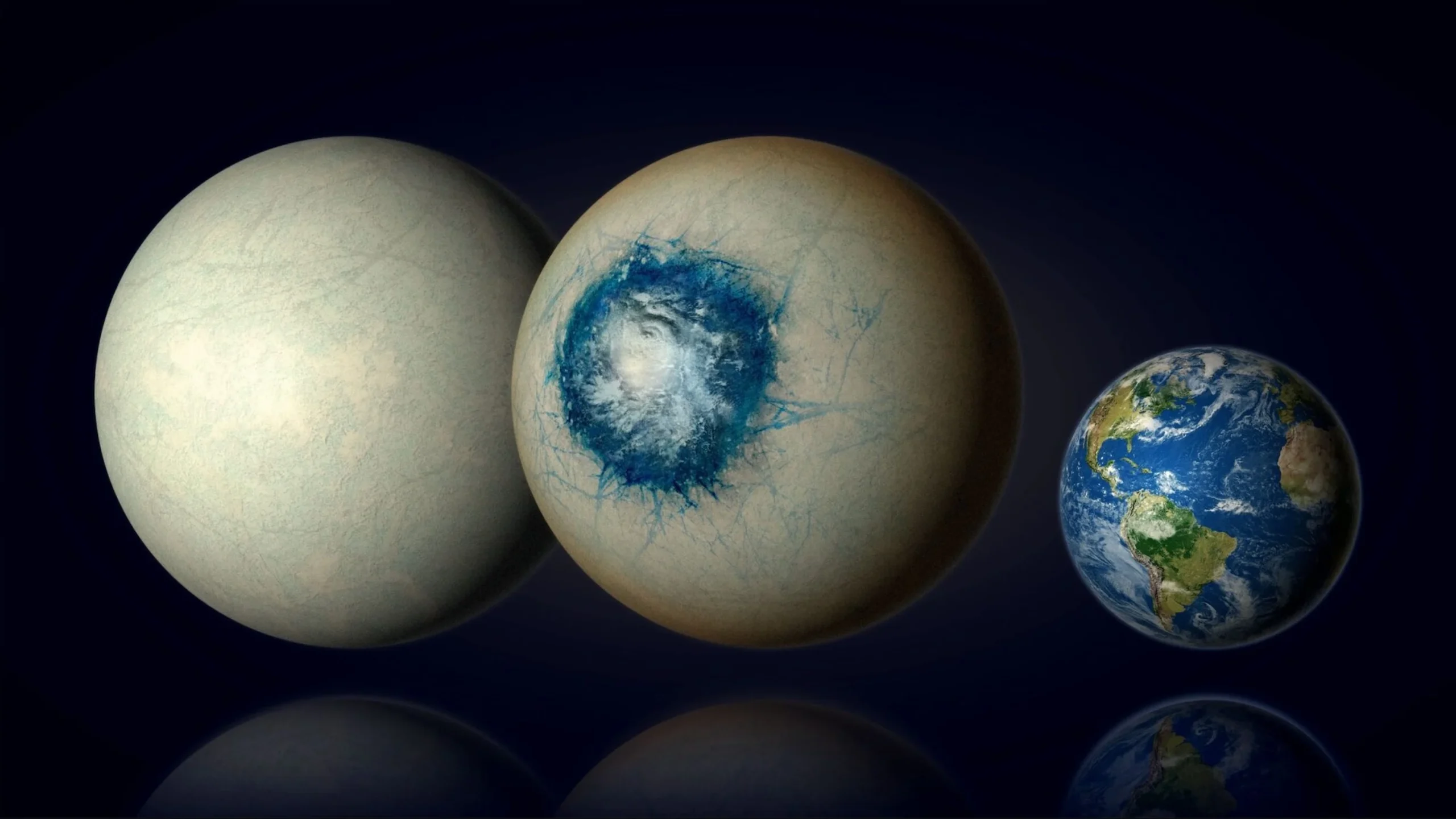
Located 124 light-years away from Earth in the constellation Leo, K2-18b has captured the imagination of astrobiologists worldwide. Classified as a "Hycean" world, this exoplanet is nested between the sizes of Earth and Neptune and possesses a vast liquid water ocean underneath a hydrogen-rich atmosphere, which has emerged as a premier target for detecting atmospheric biosignatures. The planet orbits within the habitable zone of its cool host star, K2-18, where solar temperatures are mild enough to prevent liquid oceans from boiling away. This unique atmospheric and ocean-covered dynamic creates a highly welcoming environment for complex carbon chemistry to persist over billions of years.2. How Transmission Spectroscopy Maps Alien Skies
To decode the chemical secrets of a planet trillions of miles away, the James Webb Space Telescope utilizes a state-of-the-art technique called transmission spectroscopy. As K2-18b transits in front of its home star, the star's light filters through the thin gaseous envelope of the exoplanet. Analyzing these tiny dips in light allows scientists to reconstruct atmospheric biosignatures without ever photographing the planet directly. The telescope's highly sensitive Near-Infrared Spectrograph (NIRSpec) records the unique chemical fingerprints left behind by different atmospheric elements during its brief eight-minute transit.3. The Meaning of Dimethyl Sulfide and Other Atmospheric Biosignatures
The identification of these potential atmospheric biosignatures is deeply tied to the detection of carbon dioxide, methane, and most notably, dimethyl sulfide (DMS). While the presence of carbon dioxide and methane confirms a carbon-rich environment, DMS is the true focal point of the scientific community. On Earth, these specific atmospheric biosignatures are produced solely by metabolic processes from simple marine life forms like phytoplankton. Finding traces of DMS in the skies of K2-18b suggests that similar biological activity could theoretically exist in its alien oceans."The presence of these gases is highly intriguing. While they are strongly associated with living microbes on Earth, we must be absolutely certain that abiotic geological processes cannot replicate this exact chemical mixture," explained Prof. Nikku Madhusudhan, lead researcher from the University of Cambridge.
4. Scientists Urge Caution Amid High-Stakes Space Debates
Because the detection of atmospheric biosignatures carries immense historical weight, astrobiologists urge extreme patience. The current signal remains tentative, and researchers warn that secondary geological processes, such as underwater volcanism or extreme photochemistry, might produce DMS-like signatures. Over the coming months, the James Webb Space Telescope will dedicate additional viewing cycles to confirm the presence and exact concentration of these gases. Until further peer-reviewed observations are processed, K2-18b remains the most promising candidate in our search for cosmic companions, rather than definitive proof of life.5. Key Planetary Characteristics and Chemical Metrics
The chemical profiles and structural metrics supporting these candidate atmospheric biosignatures are compiled in the table below:| Planetary Attribute | Earth | Exoplanet K2-18b | Astrobiological Significance |
|---|---|---|---|
| Physical Classification | Rocky Terrestrial Planet | "Hycean" Ocean World | Possesses vast global liquid water ocean |
| Atmospheric Composition | Nitrogen (78%) & Oxygen (21%) | Hydrogen-rich with CO2 & Methane | Indicates strong organic-chemical cycles |
| Dimethyl Sulfide (DMS) | Abundant (Produced by marine life) | Tentative Detection (In progress) | Strongest biological indicator gas found |
| Stellar Distance | 1 Astronomical Unit (AU) | 0.16 AU (Orbits Red Dwarf) | Sits comfortably in the habitable zone |
6. Frequently Asked Questions
Frequently Asked Questions (FAQ)
Q1: What are atmospheric biosignatures?A1: In planetary astronomy, atmospheric biosignatures are chemical compounds or gases present in an exoplanet's atmosphere that are strongly linked to the metabolic processes of living organisms, providing indirect evidence of extraterrestrial biological activity.
Q2: Which gases were found on K2-18b to indicate potential atmospheric biosignatures?A2: The James Webb Space Telescope detected high concentrations of carbon dioxide and methane, along with tentative signs of dimethyl sulfide (DMS). On Earth, DMS is exclusively produced by marine organisms, creating a highly intriguing combination of candidate atmospheric biosignatures.
Q3: Does the discovery of these atmospheric biosignatures mean life is confirmed?A3: No, life is not yet confirmed. While these atmospheric biosignatures are highly promising, scientists must run rigorous tests to rule out non-biological processes—such as geological activity or solar radiation interactions—that might produce the same chemical signals.