
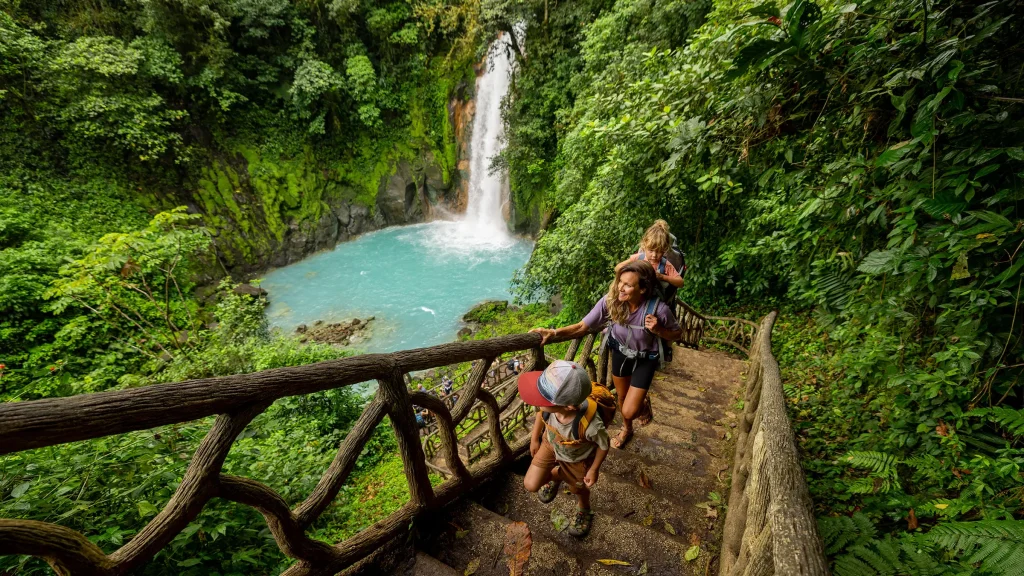
Solidifying its global leadership in conservation, Costa Rica was crowned the ultimate sustainable destination for Summer 2026 following its historic win at the inaugural Forbes Travel Awards, prompting the Costa Rican Tourism Board (ICT) to launch an aggressive high-value travel strategy on Wednesday, July 8, 2026, designed to replace mass-market tourism with regenerative, long-term stays. The country’s unique combination of lush rainforests, active volcanoes, and biodiverse coastlines has set a new benchmark for global environmental stewardship.
- 1. The Historic Forbes Travel Award Victory in Madrid
- 2. Shifting From Mass Tourism to High-Value Experiences
- 3. Deciphering Costa Rica’s Status as the Ultimate Sustainable Destination
- 4. Protected Lands and the Elite Certification Program
- 5. Comparing Eco-Tourism Infrastructure and Biodiversity Metrics
- 6. Frequently Asked Questions
1. The Historic Forbes Travel Award Victory in Madrid
Costa Rica added a monumental accolade to its long list of environmental achievements this year. The country was named the world’s “Best Nature Destination” at the inaugural Forbes Travel Awards 2026, which was presented during a high-profile ceremony in Madrid.
The committee’s decision was made entirely through internal editorial evaluations without commercial sponsorships, giving the prize massive credibility. The recognition directly reinforces Costa Rica’s decades-long effort to shield its natural treasures from environmental degradation and cemented its reputation as the planet’s ultimate sustainable destination.
2. Shifting From Mass Tourism to High-Value Experiences
In the wake of this global validation, the Costa Rican Tourism Board (ICT) is aggressively executing a specialized “sustainable, non-massive” tourism strategy. The new summer initiative targets high-spending travelers who prioritize eco-conscious travel, wellness, and deep community immersion.
This structural pivot ensures that the country maintains its status as the ultimate sustainable destination without falling victim to the pitfalls of over-tourism. Rather than seeking high volume, the ultimate sustainable destination is looking for longer-term stays that directly support localized rural economies and conservation efforts.
“Costa Rica is recognized worldwide for having 6.5% of the planet’s biodiversity, its marvelous natural landscapes, and for protecting more than a quarter of its territory. This recognition allows us to strengthen our sustainable tourism model,” explained William Rodríguez, Costa Rica’s Minister of Tourism.
3. Deciphering Costa Rica’s Status as the Ultimate Sustainable Destination
To truly understand why Costa Rica is celebrated as the ultimate sustainable destination, one must look at the integration of its “Pura Vida” philosophy into daily commerce. Green energy is a way of life, with over 98% of the country’s electricity generated from renewable resources, including geothermal, wind, and hydroelectric energy.
Additionally, the country launched its extensive European campaign, “Empieza a vivir, Pura Vida,” to encourage travelers to reset and reconnect with pristine ecosystems. Visitors are invited to participate in community-led forest restorations, which successfully doubled Costa Rica’s total tree cover over the last three decades.
4. Protected Lands and the Elite Certification Program
The foundation of Costa Rica’s ecological model rests upon its National System of Conservation Areas, which legally protects nearly 30% of its landmass. This system includes 30 national parks, 19 wildlife refuges, and multiple marine sanctuaries.
To maintain these strict standards, the ICT administers the globally recognized Certification for Sustainable Tourism (CST) program. This certification has become a worldwide model, proving why Costa Rica deserves to be called the ultimate sustainable destination by rating hotels and operators on their waste management, water-saving infrastructure, and social responsibility.
5. Comparing Eco-Tourism Infrastructure and Biodiversity Metrics
The core attributes that solidify the ultimate sustainable destination are compared to other major eco-friendly countries in the table below:
| Destination | Protected Territory % | Primary Sustainability Framework | Unique Ecological Highlight |
|---|---|---|---|
| Costa Rica (Central America) | ~30% | Certification for Sustainable Tourism (CST) | Holds 6.5% of global biodiversity in 12 life zones |
| Bhutan (South Asia) | ~50% | Sustainable Development Fee (SDF) | First carbon-negative nation on Earth |
| Palau (Western Pacific) | ~80% (Marine) | The Mandatory “Palau Pledge” for Visitors | Massive continuous marine protected sanctuary |