
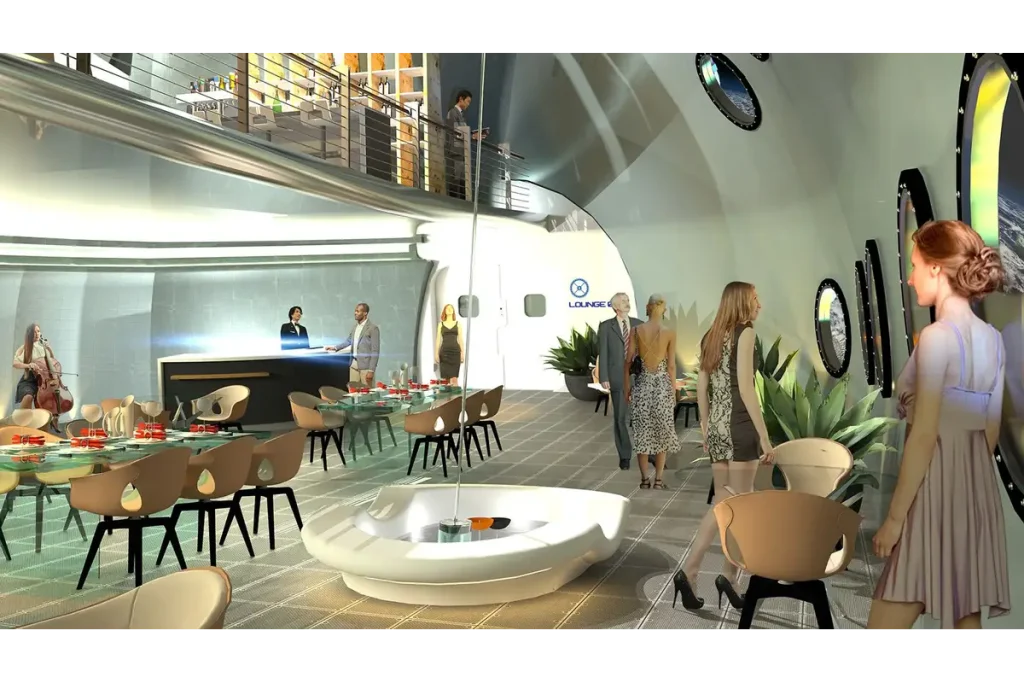
Igniting a new gold rush in extreme luxury hospitality, developers have officially opened general bookings for late 2027 slots aboard the world’s first commercial orbital space hotel on Wednesday, July 8, 2026, allowing ultra-high-net-worth travelers to secure multi-million-dollar suites equipped with simulated artificial gravity and panoramic views of Earth. The highly anticipated launch transitions low-Earth orbit from an exclusive scientific outpost into a commercial leisure environment.
- 1. The Dawn of Luxury Low-Earth Orbit Hospitality
- 2. Solving Zero-Gravity Challenges with a Spinning Outpost
- 3. Pricing and Inside the Orbital Space Hotel Suites
- 4. Transportation Logistics: Partnering with SpaceX Starship
- 5. Station Infrastructure and Operational Comparisons
- 6. Frequently Asked Questions
1. The Dawn of Luxury Low-Earth Orbit Hospitality
For decades, orbital living was the exclusive domain of highly trained government astronauts residing in cramped, industrial research facilities. Today, that paradigm has officially shattered as private space construction corporations open reservation portals to the public.
The transition from scientific research labs to a fully functional orbital space hotel marks the birth of true commercial off-world tourism. Operating as a rotating wheel in low Earth orbit, the habitat promises to merge the thrill of weightlessness with the comforts of a five-star resort.
2. Solving Zero-Gravity Challenges with a Spinning Outpost
The central engineering innovation of the Voyager Station is its massive 200-meter-wide ring-shaped structure. This rotating design makes the orbital space hotel highly distinct from the International Space Station, which operates in constant microgravity.
By spinning on its axis, the station pushes its contents outward toward the perimeter, producing simulated gravity equivalent to one-sixth of the Earth’s pull. By generating simulated gravity, the orbital space hotel minimizes the uncomfortable physical side-effects of prolonged weightlessness, allowing guests to eat, sleep, and shower in a familiar environment.
3. Pricing and Inside the Orbital Space Hotel Suites
The price tag for this extraterrestrial vacation remains extraordinarily steep, cementing it as an elite playground for high-net-worth consumers. To book a three-day stay at this premier orbital space hotel, travelers must prepare to pay upwards of $5 million per reservation.
The interior design of this orbital space hotel rejects the sterile, metallic look of classical spaceships, opting instead for warm wooden accents, plush beds, and ambient lighting. Guests can enjoy gourmet cuisine curated by world-renowned chefs, relax at an onboard cocktail bar, or play low-gravity basketball in a high-ceilinged gymnasium.
“We are trying to make the public realize that this golden age of space travel is just around the corner. It is not a movie set; it is a vibrant living space that will rival the finest resorts on Earth,” stated John Blincow, chief executive of the project.
4. Transportation Logistics: Partnering with SpaceX Starship
Launching passengers to the orbital space hotel requires highly reliable, heavy-lift transport mechanisms. To facilitate transit, developers are in active coordination to utilize SpaceX’s fully reusable Starship launch vehicle.
Travelers will undergo rigorous physical screening and a specialized safety training regimen prior to launch at a commercial spaceport. Once in orbit, the transport capsule will dock securely with the station’s central hub, allowing guests to transfer to their luxurious outer-ring villas.
5. Station Infrastructure and Operational Comparisons
The specifications defining this pioneering orbital space hotel compared to traditional habitats are compiled in the table below:
| Sovereign / Commercial Habitat | Max Passenger Capacity | Gravity Environment Status | Primary Use Case Target |
|---|---|---|---|
| Voyager Station (Space Hotel) | Up to 440 (Guests & Crew) | Simulated 1/6th Earth Gravity (Spinning) | Luxury Leisure, Entertainment, Tourism |
| International Space Station (ISS) | 7 – 10 Astronauts | Constant Microgravity (Weightless) | Government Scientific Research |
| Haven-1 (Vast Space) | 4 Passengers | Constant Microgravity (Weightless) | Private Astronaut and Micro-Lab Missions |