
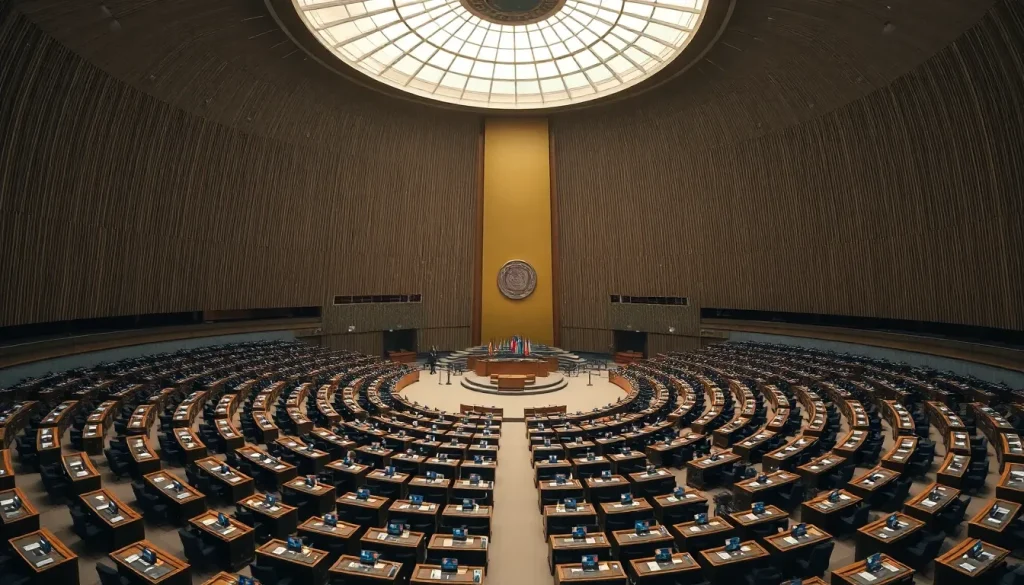
As the UN’s flagship AI for Good Global Summit kicked off in Geneva, escalating corporate transition costs emerged as a central point of tension on Wednesday, July 8, 2026, as policymakers and industry leaders gathered to address the financial and ethical hurdles of deploying an automated workforce worldwide. The landmark event brings together international delegations to seek concrete guardrails against widening economic divides.
1. Global Leaders Assemble at Palexpo Geneva
Organized by the International Telecommunication Union (ITU) in partnership with over 50 UN sister agencies, the AI for Good Global Summit brought together thousands of global experts. Under the high-altitude skylights of Geneva’s Palexpo exhibition center, delegates are actively seeking practical pathways to scale artificial intelligence technologies responsibly.
However, the initial optimism surrounding technological breakthroughs has been deeply tempered by harsh economic realities. Small and medium enterprises (SMEs) are struggling to keep pace, while navigating the severe corporate transition costs of updating legacy IT systems.
2. The Hidden Reality of Corporate Transition Costs
While generative artificial intelligence promises unprecedented productivity gains, the fiscal path to enterprise-wide implementation remains dangerously steep. According to recent UN studies, these corporate transition costs are far higher than originally estimated by commercial technology vendors.
Firms face not only hardware expenses but also massive human capital reorganization, further ballooning their corporate transition costs. Upgrading cybersecurity protocols to protect sensitive proprietary databases represents another multi-million-dollar barrier for the private sector.
“We are seeing a massive gap between the hype of immediate AI integration and the fiscal reality of restructuring a business. It’s not a simple plug-and-play revolution,” noted Doreen Bogdan-Martin, Secretary-General of the ITU, during an opening panel session.
3. Confronting the Rise of the Automated Workforce
As automation accelerates across manufacturing, retail, and white-collar sectors, the global labor market is experiencing a profound structural realignment. Integrating an automated workforce requires immense investment, and these rising corporate transition costs threaten to slow down adoption in developing economies.
Delegates voiced deep concerns that without global standards, only the wealthiest multi-national corporations will successfully navigate the transition, leaving smaller enterprises completely behind. This disparity could trigger a wave of job losses without the safety net of robust digital retraining initiatives.
4. Proposing Standardized AI Readiness Frameworks
To address this looming divide, the UN has introduced a series of international policy guidelines, including the “AI Ready” analysis. By standardizing how we measure corporate transition costs, the ITU hopes to create a level playing field for developing states.
These frameworks focus on providing step-by-step roadmaps for public-private partnerships. The goal is to synchronize corporate retraining programs with sovereign educational systems, cushioning the global workforce from sudden, abrupt job displacement.
5. Projecting Technological Displacement and Cost Metrics
The projected global breakdown of corporate transition costs is detailed in the table below:
| Transition Expense Category | Global Projected Cost (2026-2028) | Primary Corporate Hurdle | Recommended Mitigation Strategy |
|---|---|---|---|
| Infrastructure & Compute Upgrades | $450 Billion | Legacy system incompatibility and chip shortages | Gradual cloud migration |
| Workforce Retraining & Reskilling | $320 Billion | High employee churn and outdated curricula | Sovereign educational alignment |
| Security & Compliance Audits | $180 Billion | Rapidly shifting regional data governance laws | Global AI readiness frameworks |
| Severance & Displacement Packages | $120 Billion | Reputational damage and labor union friction | Proactive transition counseling |