
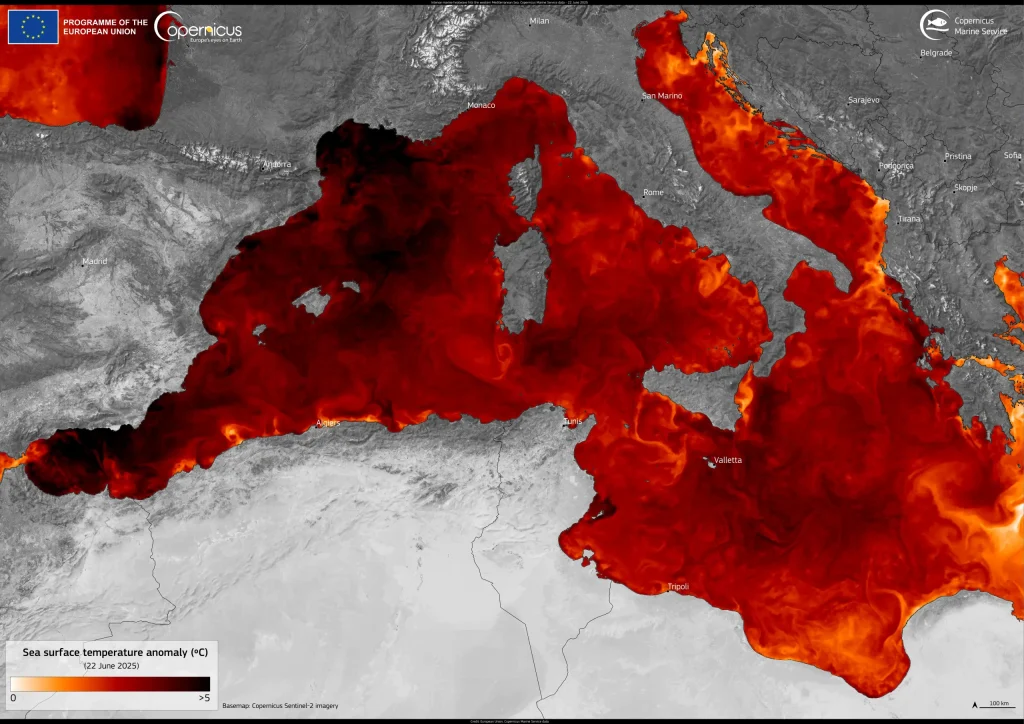
As a brutal Mediterranean heatwave intensifies across Southern Europe, emergency services in Portugal, Spain, Italy, and Greece were placed on the highest level of alert this Wednesday, July 8, 2026, following warnings of life-threatening temperatures climbing towards 43°C. The World Health Organization (WHO) has convened an urgent regional response to mobilize heat-health action plans and combat a critical public health crisis. Local municipal teams are rapidly opening designated public cooling spaces to protect vulnerable populations.
- 1. Historic Thermal Stress Grips Southern Europe
- 2. WHO Mobilizes 41 Nations for Emergency Measures
- 3. Escalating Wildfire Threat and Marine Heat Anomaly
- 4. Heat-Health Action Plans Save Lives During the Mediterranean Heatwave
- 5. Temperature Forecasts and Regional Alert Status
- 6. Frequently Asked Questions
1. Historic Thermal Stress Grips Southern Europe
The current Mediterranean heatwave follows a devastating June spell that claimed more than 3,700 excess lives across Western Europe. Forecasters predict that the oncoming heat dome building over the Atlantic will push local mercury readings past 43°C (109°F) in Portugal and Southern Spain.
Countries like Italy, Greece, and France are bracing for another grueling week as tropical nights prevent urban temperatures from dropping. Healthcare infrastructure is already reporting elevated emergency call volumes as citizens experience heat exhaustion.
2. WHO Mobilizes 41 Nations for Emergency Measures
On Monday, July 6, 2026, the World Health Organization (WHO) Regional Director for Europe, Dr. Hans Henri P. Kluge, convened an emergency call. This urgent summit brought together representatives from 41 member states to coordinate defensive public health protocols.
“The next heatwave is already building over the Atlantic… Yesterday I convened an emergency call on extreme heat, which brought together representatives from 41 WHO/Europe Member States… It was a clear sign of how seriously countries are treating extreme heat as a public health emergency, not just a weather event,” Dr. Kluge stated.
This second consecutive Mediterranean heatwave has prompted immediate international coordination to protect vulnerable groups. Focus has shifted to reaching care home residents, the homeless, and socially isolated older adults before conditions worsen.
3. Escalating Wildfire Threat and Marine Heat Anomaly
The extreme land temperatures are accompanied by a critical environmental crisis on both land and sea. Marine ecosystems are also under severe pressure, with the Mediterranean heatwave driving sea surface temperatures up to 8°C above historical averages.
Furthermore, dry conditions have triggered early-onset wildfires across Spain, France, Greece, and Portugal. By early July, over 42,000 acres of forests and natural reserves have already been scorched, placing heavy demands on regional firefighting teams.
4. Heat-Health Action Plans Save Lives During the Mediterranean Heatwave
During a prolonged Mediterranean heatwave, structured heat-health action plans are critical tools to reduce mortality rates. Countries like Italy, Spain, and Austria have successfully utilized warning networks, cooling centers, and media campaigns to protect their citizens.
However, the WHO warns that less than half of its European member states currently have operational heat-health action plans. Emergency crews are working around the clock to fix gaps discovered during the June heat crisis before the next temperature peak hits.
5. Temperature Forecasts and Regional Alert Status
As temperatures climb, local meteorological bureaus are issuing red warnings to safeguard the public. The severity of the ongoing Mediterranean heatwave is detailed in the table below:
| Region / Country | Forecasted Peak Temp | Alert Level Status | Primary Environmental Risk |
|---|---|---|---|
| Southern Spain & Portugal | 43°C (109°F) | Red Warning (Highest) | Extreme wildfire outbreak |
| Central Italy (16 Cities) | 40°C (104°F) | Red Heat Alert | Severe urban heat island effect |
| Greece & Aegean Coast | 41°C (106°F) | Orange Warning | Agricultural drought & high winds |
| Southern France / Corsica | 39°C (102°F) | Orange Warning | Marine ecosystem thermal stress |