
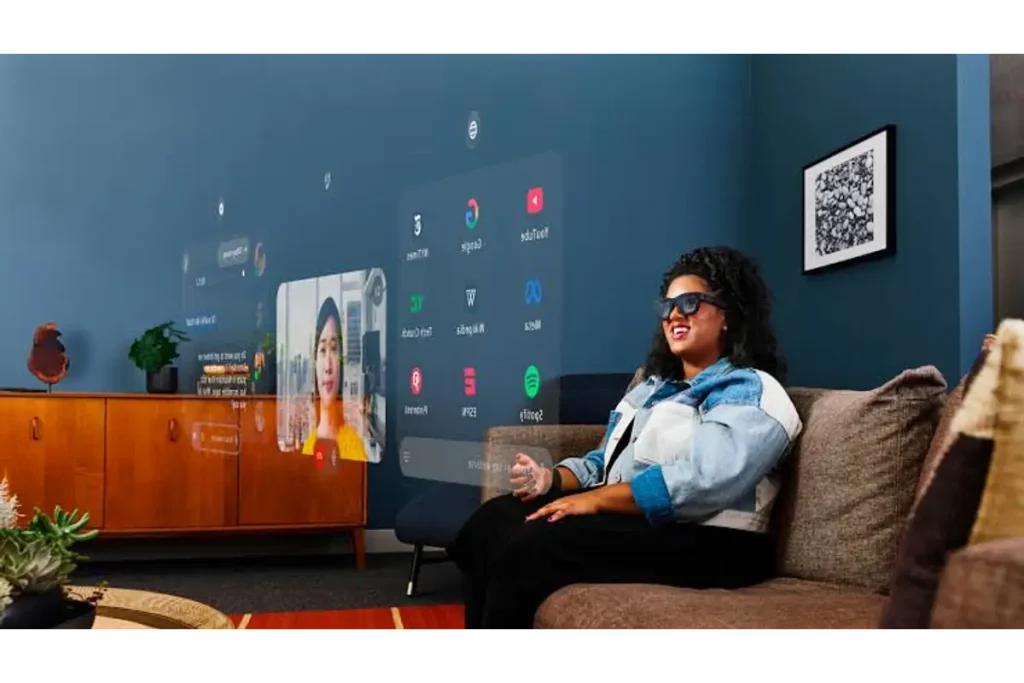
Showcased at a major global consumer tech exhibition on Wednesday, July 8, 2026, next-generation lightweight AR glasses have captured the industry’s spotlight as silicon valley giants announce bold plans to phase out physical smartphones by 2030. Driven by advanced multimodal artificial intelligence and microscopic waveguide displays, these revolutionary wearables are designed to transition personal computing from the pocket to the eyes.
1. The Death of the Pocket Screen: A 2030 Vision
Mobile phones have dominated personal computing for nearly two decades, shifting from physical-button bricks to ultra-thin glass rectangles. However, industry visionaries warn that the era of pulling a device out of your pocket is rapidly coming to an end.
The transition from carrying technology to wearing it is already underway, and the rapid adoption of lightweight AR glasses is proof of this cultural shift. Major developers argue that spatial computing will make the traditional smartphone obsolete before the turn of the decade.
2. Inside the Waveguide Revolution of Lightweight AR Glasses
Designing lightweight AR glasses requires solving a complex trade-off between battery size and physical weight. Early prototypes often looked like bulky, uncomfortable virtual reality visors that alienated mainstream consumers.
To bridge this gap, modern lightweight AR glasses have achieved comfortable all-day wearability by moving heavy compute tasks to pocket-sized pucks or cloud networks. By utilizing high-refractive silicon-carbide waveguides and micro-LED projectors, developers can now project crisp virtual screens without adding strain to the nose or ears.
“A consumer will not wear something on their face that weighs more than 75 grams. The engineering triumph of 2026 is that we have finally cracked the optics-to-weight ratio for mainstream adoption,” noted a lead spatial hardware designer in Geneva.
3. How Multimodal AI Fuels Hands-Free Computing
The primary interface driving this hands-free revolution is not keyboard typing, but context-aware artificial intelligence. By pairing micro-cameras with advanced large language models, the eyewear can see what you see and hear what you hear.
By using voice and gesture controls, these lightweight AR glasses remove the friction of tapping a screen. Whether translating foreign road signs in real-time or displaying step-by-step cooking recipes directly over your kitchen counter, the technology adapts seamlessly to your environment.
4. Tech Giants Mobilize for the Ultimate Wearable War
The market landscape in 2026 is experiencing an aggressive land grab as tech conglomerates rush to secure early patents. Firms like Rokid, Meta, and Xreal are leading the race, launching competitive lightweight AR glasses that look exactly like normal eyewear.
Concurrently, joint ventures between Google, Samsung, and Qualcomm are preparing to launch specialized Android XR devices to counter Apple’s ecosystem. This massive wave of capital investment ensures that wearable screens will continue to shrink in price while rapidly expanding in capability.
5. Wearable XR Specifications and Market Comparisons
The technical parameters distinguishing these new lightweight AR glasses from traditional VR headsets are outlined in the comparison table below:
| Device Category | Average Weight | Primary Control Interface | Ideal Use Case |
|---|---|---|---|
| Lightweight AR Smart Glasses | 45g – 75g | Voice commands, eye-tracking, wrist gestures | All-day ambient AI, navigation, instant alerts |
| Clips & Tethered Video Glasses | 75g – 110g | Tethered smartphone / external controller | Extended movie streaming, portable gaming, coding |
| Mixed Reality Headsets (MR) | 500g – 650g | Hand-tracking, controllers, physical dials | Immersive workspace, industrial 3D design |