
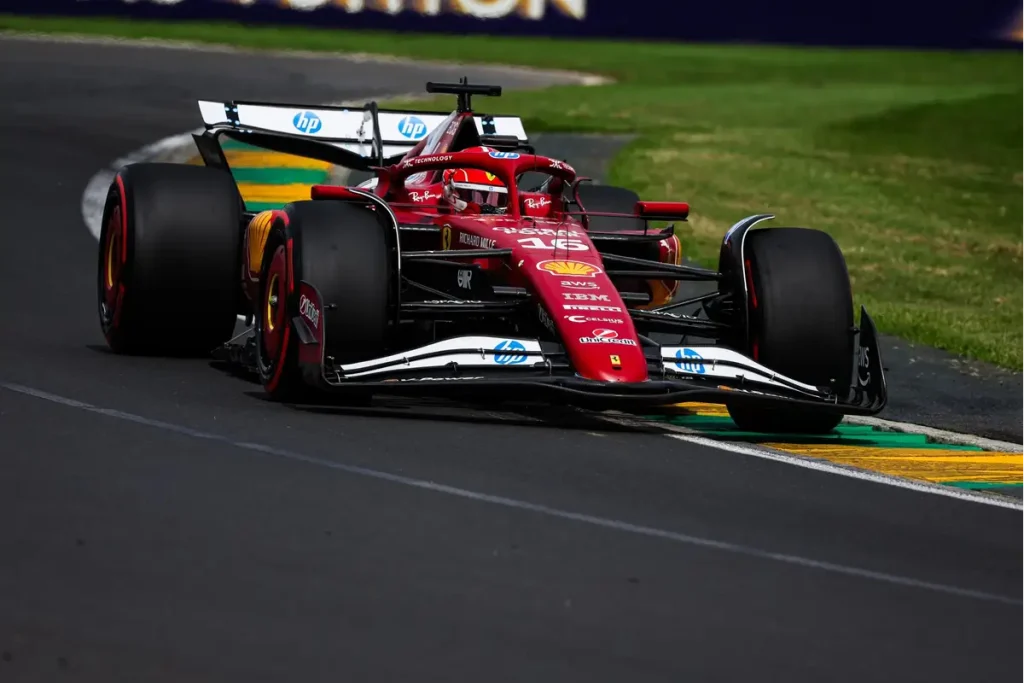
Following a chaotic finish to the race on Sunday, July 5, 2026, Ferrari strategic decisions took center stage in the Silverstone paddock as team principal Fred Vasseur defended a controversial late safety car pit-stop that cost Lewis Hamilton a potential second-place finish but secured Charles Leclerc’s historic victory at the British Grand Prix. The dramatic conclusion left both fans and drivers divided over the late-race execution.
1. A Milestone 250th Victory Wrapped in Controversy
Scuderia Ferrari enjoyed a historic afternoon at Silverstone as Charles Leclerc claimed his first victory of the 2026 season. This hard-fought win marked Ferrari’s landmark 250th Grand Prix victory in Formula 1 history, celebrating at the very circuit where they secured their first-ever win back in 1951.
However, the historic milestone was partially overshadowed by the post-race paddock chatter, which was heavily influenced by late-race Ferrari strategic decisions. Fans and analysts immediately debated whether the team cost themselves a secure one-two finish by unnecessarily altering their positioning.
2. Hamilton’s Disappointment with the Late Pit Call
Lewis Hamilton, who finished third behind Mercedes’ George Russell, was vocal about his disappointment. Running comfortably in second behind Leclerc, Hamilton was called into the pits when a late safety car was deployed following Max Verstappen’s crash on lap 48.
The seven-time world champion openly questioned the Ferrari strategic decisions that saw him lose track position to Russell, who chose to stay out on his older tyres. Hamilton later admitted he assumed he would hold his position despite the extra pit stop.
“The team asked me to stop. I assumed in stopping that we would be holding position. If they told me, ‘You’re stopping and you’re losing position,’ I wouldn’t have done it,” Hamilton told reporters.
3. Fred Vasseur Defends Ferrari Strategic Decisions Under the Safety Car
In the post-race debrief, Fred Vasseur remained resolute in backing his team’s Ferrari strategic decisions. He explained that leaving Hamilton on old tyres would have made him defenseless if a green flag restart had actually taken place.
According to Vasseur, analyzing Ferrari strategic decisions after the race with hindsight is easy, but on the pit wall, they had to react to the worst-case scenario. The primary expectation of the strategists was that the race would restart with at least one competitive lap remaining.
“If you don’t pit and Russell pits and he’s on new softs and we’re on old hards at the restart… we were just surprised that the race didn’t restart. But it is what it is,” Vasseur defended.
4. The FIA Software Error That Denied a Restart
The controversy deepened after the FIA revealed that a critical software error had sent conflicting messages to the teams. Race control briefly broadcasted that the Safety Car would return to the pit lane, only to reverse the decision shortly after.
Under the sporting regulations, the message allowing lapped cars to overtake was sent just as Leclerc started the penultimate lap, making a restart legally impossible. This software mishap turned otherwise logical Ferrari strategic decisions into an accidental strategic disadvantage for Hamilton.
5. Strategic Pit Stop and Position Metrics
The late-stage pit lane choices reshaped the final podium order behind Leclerc. The impact of the late Ferrari strategic decisions on the final podium standings is detailed below:
| Driver | Safety Car Choice | Tire Compound | Final Classification |
|---|---|---|---|
| Charles Leclerc (Ferrari) | Pitted on Lap 48 | New Soft (Red) | 1st Place (Winner) |
| George Russell (Mercedes) | Stayed Out on Track | Used Hard (White) | 2nd Place |
| Lewis Hamilton (Ferrari) | Pitted on Lap 48 | New Soft (Red) | 3rd Place |